The Cloudflare Outage Took Down Parts of the Internet. Here’s What Businesses Can Learn from It.

Cloudflare Outage

The Cloudflare Outage Took Down Parts of the Internet. Here’s What Businesses Can Learn from It.

Cloudflare Outage

The Cloudflare Outage Took Down Parts of the Internet. Here’s What Businesses Can Learn from It.

Cloudflare Outage

What Happened During The Cloudflare Outage? Quick Breakdown

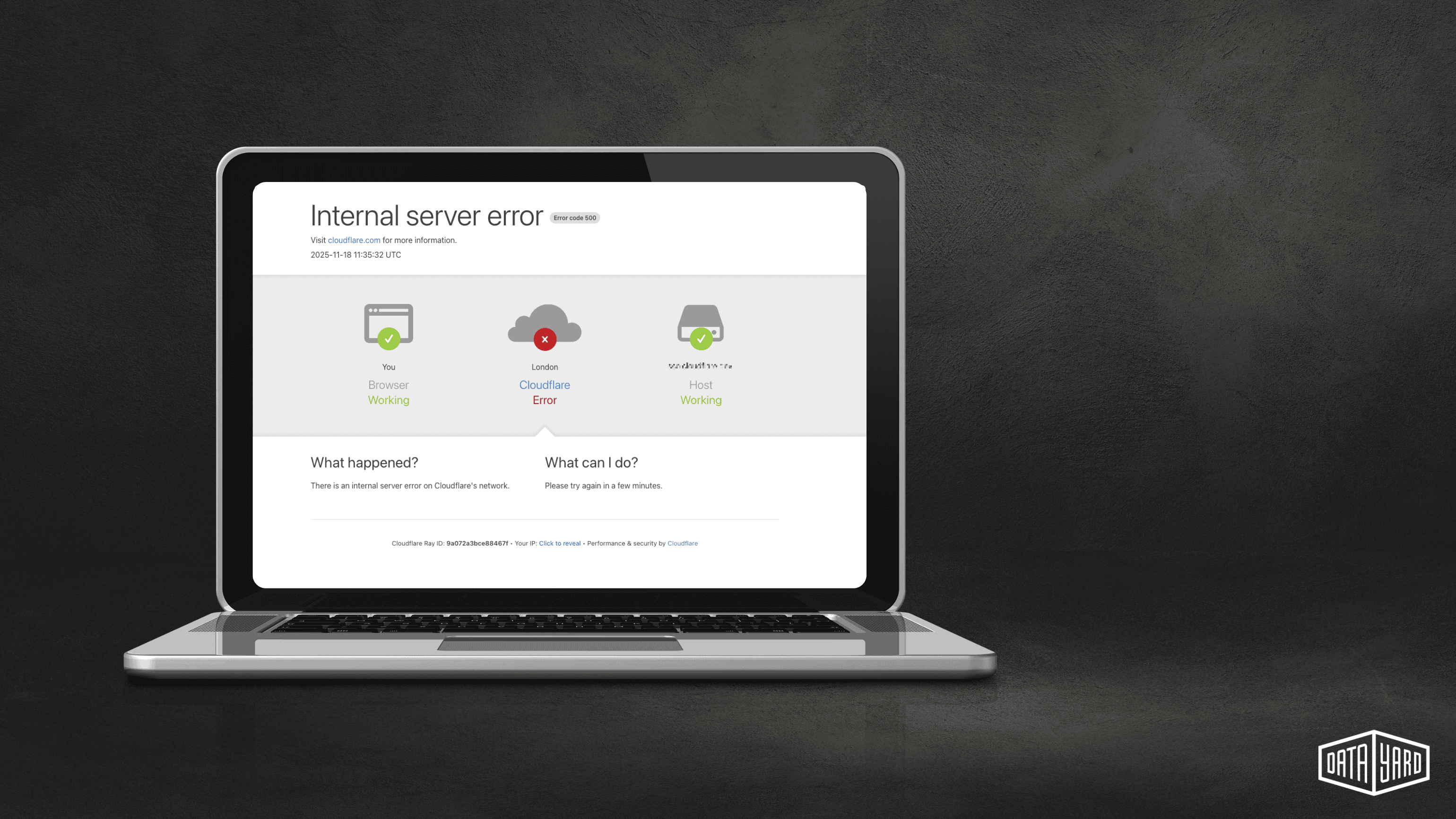
At 11:20 AM UTC on November 18, 2025, a Cloudflare outage began when a misconfigured database permission allowed a Bot Management feature file to grow uncontrollably large. This oversized file overwhelmed Cloudflare’s routing and proxy systems, causing cascading crashes across the global network.

Cloudflare outage picture of laptop in November 2025


The incident impacted core services — CDN delivery, DNS, WAF, Access, caching (Workers KV), and the Cloudflare Dashboard — resulting in six hours of widespread disruption.

While early diagnostics suggested a possible malicious attack, Cloudflare later confirmed the root cause was internal — not a security event, but a misconfiguration error. Services were restored gradually over several hours, but impact varied by region and setup.

(Source: Cloudflare Blog – November 18 OutageCloudflare outage picture of laptop in November 2025)

How The Cloudflare Outage Impacted Businesses


If your company relies on Cloudflare for DNS, CDN, or edge security services — directly or through a vendor — you likely saw immediate operational impacts that affected customers, users, and revenue.

  • Impact: Access — Downtime or limited access to websites and internal portals, with some sites returning HTTP 5xx errors.
  • Impact: Authentication — Failed user logins, broken single-sign-on flows, and portal timeouts that locked users out of services.
  • Impact: Presence — Loss of public web presence during critical hours, meaning customers couldn’t reach product pages or documentation.
  • Impact: Revenue & Experience — Missed conversions, failed transactions, and frustrated customers that can translate into measurable revenue loss and increased support load.

For many organizations, the outage was a wake-up call about centralization risk: when core DNS and edge services go dark, sites and services worldwide can suddenly become unreachable. If you’re unsure whether your website or third-party tools depend on Cloudflare, a quick audit can reveal single points of failure and help prioritize fixes.

What You Might Have Missed During the Cloudflare Outage


Even if your site didn’t go down completely, you may still have been affected.

 

Here are a few ways you might have been affected:

⚠ Did your analytics data drop?
CDNs and edge workers failing can interrupt data collection — meaning lost visibility into user behavior.

⚠ Were forms or checkout pages impacted?
Even small dips in reliability during the Cloudflare outage could have cost conversions or transactions.

⚠ Did you rely on Access or bot protection?
When WAF and authentication tools failed, some users experienced login issues, or worse, increased risk exposure.

These subtle failures often go unnoticed until they become costly. That’s why proactive auditing matters.

Lessons from The Cloudflare Outage


While we understand that mistakes happen — and the November 18 outage was ultimately caused by a preventable internal configuration error — there are always lessons to take away. In their detailed postmortem, the Cloudflare team explained what went wrong and how they resolved it. While they didn’t publish a formal list of next steps, the incident clearly pointed to several key areas for improvement:

More robust file size validation, particularly for features like Bot Management
Stronger observability and diagnostic tools to avoid misinterpreting system failures
Improved safeguards and testing before global configuration rollouts

(Source: Cloudflare Postmortem Blog – November 18 Outage)

In closing, Cloudflare CEO Matthew Prince shared this statement:
“An outage like today is unacceptable. We’ve architected our systems to be highly resilient to failure to ensure traffic will always continue to flow. When we’ve had outages in the past it’s always led to us building new, more resilient systems.
On behalf of the entire team at Cloudflare, I would like to apologize for the pain we caused the Internet today.” – Cloudflare Postmortem

You Can’t Prevent Outages. But You Can Be Prepared for Them.


This November 18th outage reminded us just how much of the Internet runs through a small number of large providers, and how a single misstep can create ripple effects across the globe. In this case, an internal configuration issue in Cloudflare’s Bot Management system pushed out a malformed file, disrupting core services like DNS, CDN delivery, and web access for thousands of businesses worldwide. It wasn’t a cyberattack; it was a self-inflicted error with Internet-scale consequences.


The takeaway? Just because your infrastructure lives in “the cloud” with a well-known provider, doesn’t mean you’re immune to outages. Centralized services still carry centralized risk. Outages like this highlight the importance of resilient architecture, vendor diversification, and proactive visibility into your dependencies. You can’t eliminate every outage, but with a smart design and clear contingency planning, you can try to make sure one bad day doesn’t take everything down with it.

Let’s Talk About Your Plan


Need help building an overall disaster recovery plan or have another cloud concern?

Let’s start the conversation. No pressure, just practical advice from a team who’s seen it before.
[email protected]
→ 937-226-6896
datayard.us

Want to Assess Your Cloud Resilience?


Our RISE Foundations Assessment is a free, 10-minute quiz that quickly flags weak spots in your infrastructure, so you’re prepared to adjust before the next outage instead of reacting to it. We provide a free easy-to-follow report with prioritized recommendations and remediation steps straight to your preferred email.

Take the RISE Today


FAQs: Cloudflare Outage & Business Website Hosting

Q: Should we stop using Cloudflare?
A: No. Cloudflare remains a powerful provider of CDN, WAF, DNS, and edge services that improve performance and security most days. The right response is not to abandon the service but to plan around it: implement redundancy, failover playbooks, and automated monitoring so an outage doesn’t become a business crisis.

Q: We didn’t know our site used Cloudflare. How do we check?
A: You can check quickly with tools like dig, nslookup, or online header checkers. For example: dig +short NS yourdomain.com and curl -I yourdomain.com to inspect headers for Cloudflare.

Q: Is this kind of outage common?
A: No — major provider outages are relatively rare, but when they happen, the impact can be huge because of centralized dependency. That’s why resilience, failover testing, and clear change-management controls matter more than just uptime numbers. Monitor provider status pages (for example, Cloudflare’s status page) and run regular drills so your team can react quickly when problems arise.

Blog last updated: November 25, 2025


Resources

Cloudflare (2025). Cloudflare status. Cloudflare Status History Atom. https://www.cloudflarestatus.com/

Prince, M. (2025, November 18). Cloudflare outage on November 18, 2025. The Cloudflare Blog. https://blog.cloudflare.com/18-november-2025-outage/?

Check out our other blogs