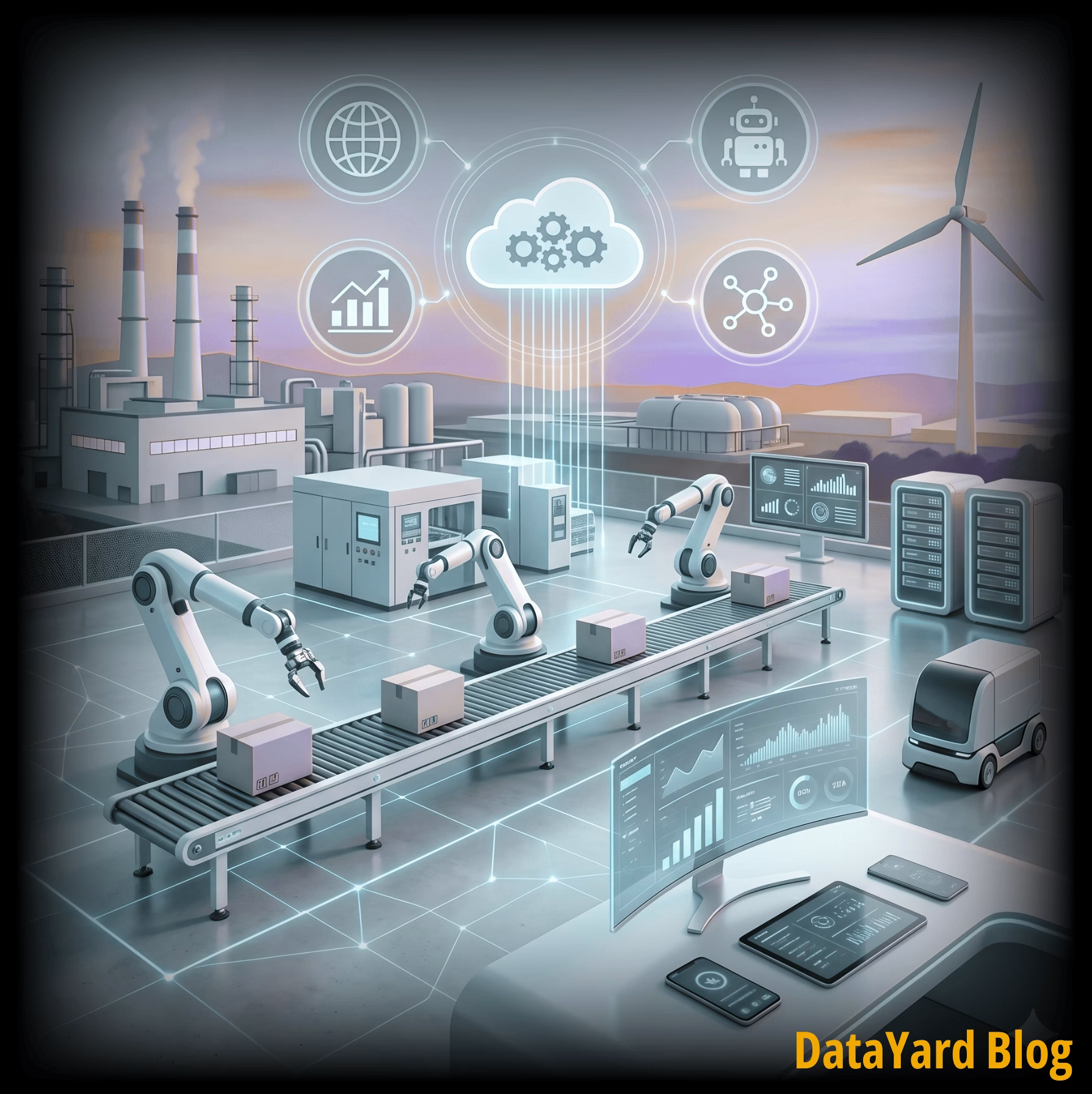
Why Manufacturing Runs on Legacy Systems (And Why That's Not Always a Bad Thing)
Manufacturing environments prioritize stability above almost everything else. Systems that control machinery, production schedules, inventory management, or supplier coordination are rarely replaced quickly because disruption carries real operational risk.
When a system controls your production line, it usually stays in place until there is a reason to change it.
Most manufacturers operate a combination of:
- Legacy ERP systems
- Manufacturing Execution Systems (MES)
- Custom internal applications
- On-premise SQL databases
- File servers supporting production and engineering teams
The physical hardware running these systems often remains in place past its prime because replacing them outright can be expensive and disruptive. The problem is what happens when the infrastructure supporting them starts to age out.
The Real Problem: What Happens When Infrastructure Gets Old
As servers move past their recommended lifecycle, the risk of disruption increases — often in ways that aren't obvious until something breaks. It's important to understand these risks so you can prepare before they impact operations.
Here are four risks that come with aging manufacturing infrastructure:
Hardware Failure Risk
Most enterprise servers are designed for a lifecycle of 3–5 years according to a variety of hardware manufacturers, though real-world deployments often run longer. Industry research from Park Place Technologies estimates typical lifespans of around 6 years for rack servers and up to 10 years for integrated systems.
As systems age beyond these ranges, hardware failures become more likely, and replacement components become harder to obtain. Unexpected failures can bring critical applications offline, delay recovery efforts, and create cascading issues across dependent systems.
When that happens in a manufacturing environment, the consequences quickly move from technical problems to operational disruption.
Downtime and Production Disruption
When critical systems go down, the resulting downtime can become costly. A Siemens study estimated that "the cost for an average large plant in the sectors we surveyed is now $253 million a year."
Even small interruptions can delay shipments, disrupt production schedules, and impact customer commitments. At the same time, aging infrastructure can create gaps in visibility and protection that expose businesses to modern cybersecurity threats.
Security Vulnerabilities
Manufacturing has become one of the most frequently targeted sectors for cyberattacks.
Older infrastructure often lacks modern monitoring, automated patching, network segmentation, and advanced threat detection. Even when legacy systems continue running, they often require increased effort and additional resources to maintain.
Rising Maintenance Costs
As systems age, organizations spend increasing time maintaining them. Replacement parts, manual management processes, and emergency repairs can gradually increase operational costs. In many environments, maintaining legacy infrastructure eventually becomes more expensive than modernizing it.
At that point, businesses are not just maintaining infrastructure -- they're investing more each year to sustain systems that provide less reliability and fewer capabilities than modern alternatives.
To better understand the impact of modernization, it helps to compare legacy infrastructure with a modernized environment. The differences often appear in reliability, security, backup capabilities, and scalability.
Keep in mind, modernization doesn't always mean a full replacement. For many organizations, it involves a hybrid approach -- combining existing infrastructure with private or public cloud resources to improve performance, resilience, and flexibility.
The table below highlights how common risks in legacy infrastructure translate into practical benefits when environments are modernized.
← Scroll to see full table →
| Area | Legacy Infrastructure Risk | Modernized Environment Benefit |
|---|---|---|
| Hardware | Aging servers prone to failure | Virtualized infrastructure with redundancy |
| Security | Limited monitoring and end-of-life security updates | Continuous monitoring and automated updates |
| Backup | Manual or untested recovery processes | Automated backups with tested recovery |
| Scalability | Fixed hardware capacity | Scalability options in the cloud |
DataYard helps manufacturers move forward — with private cloud environments designed for organizations that can't afford downtime. Proven since 1995.
Let's Talk Shop →Signs Your Manufacturing Systems Need Legacy System Modernization
Many legacy systems remain stable for years. The challenge is recognizing when the infrastructure supporting those systems begins creating operational risk.
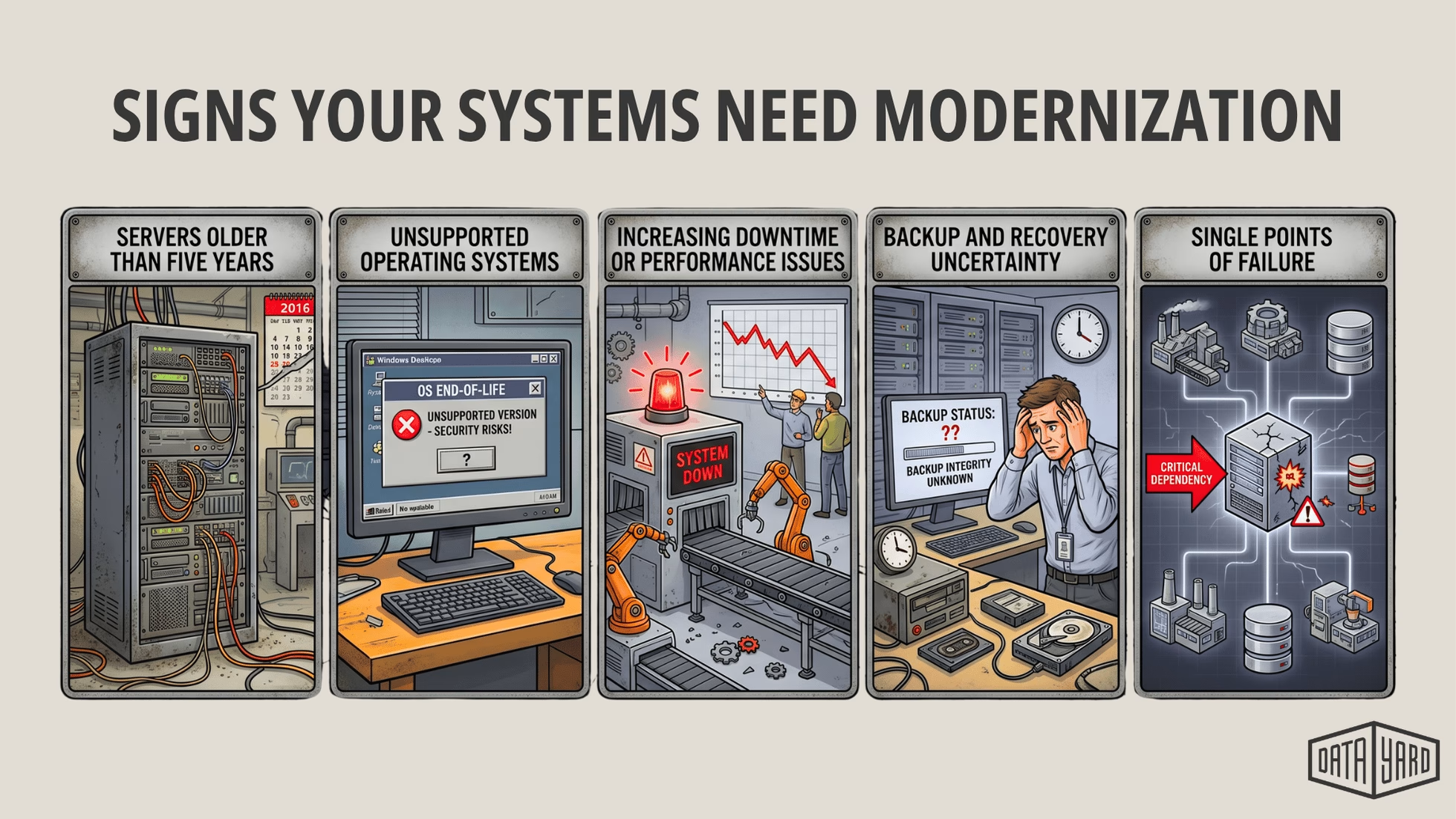
Here are the most common warning signs we see when working with manufacturers in the region.
Servers Older Than Five Years
Most enterprise hardware is designed for a lifecycle of 3–5 years. Servers older than that may still function, but the failure risk increases significantly. When critical systems depend on aging hardware, a single failure can suddenly disrupt production.
Unsupported Operating Systems
Operating systems and databases eventually fall out of vendor support. Once this happens, security patches stop, compatibility issues increase, and vendor support becomes limited. Running unsupported infrastructure increases exposure to ransomware and security vulnerabilities.
Increasing Downtime or Performance Issues
Aging infrastructure often begins showing symptoms such as slower system performance, intermittent outages, storage limitations or other resource bottlenecks, and network latency. These issues can quietly impact production efficiency long before a major outage occurs.
Backup and Recovery Uncertainty
Many organizations assume their backup systems will work during a crisis. However, during modernization assessments, it is common to discover that backups have never been fully tested, restore processes take far longer than expected, and recovery procedures are undocumented. Reliable disaster recovery requires modern backup infrastructure and regular testing.
Single Points of Failure
Older environments frequently contain infrastructure that was never designed with redundancy — a single server supporting ERP or MES workloads, a single storage array holding production data, or one network device connecting multiple facilities. Modern infrastructure introduces redundancy and failover protections to reduce operational risk.
Noticing you're checking a few of those boxes? Get a straight answer from our team before it becomes a bigger issue.
Most Commonly Modernized Manufacturing Systems
Modernization efforts typically focus on the infrastructure supporting a handful of mission-critical systems. These are the platforms that directly impact production, visibility, and day-to-day operations.
Below is a breakdown of common systems, and why they're often modernized:
← Scroll to see full table →
| System | Why It Gets Modernized |
|---|---|
| ERP Systems | Central production coordination |
| MES Platforms | Real-time manufacturing workflows |
| SQL Production Databases | Growing operational data |
| Engineering File Servers | CAD files and operational documentation |
| Custom Internal Applications | Production reporting and workflow tools |
Knowing what to modernize is half the battle — the other half is choosing the right way to do it. Here are a few of the most common areas where modernization makes an immediate impact:
ERP Systems
ERP systems manage inventory, purchasing, scheduling, and financial operations. Because these systems sit at the center of manufacturing operations, replacing them can introduce significant risk, which is why modernization efforts often benefit from experienced infrastructure teams. Infrastructure modernization typically focuses on improving the servers and databases that support the ERP environment.
Manufacturing Execution Systems (MES) Platforms
Manufacturing Execution Systems coordinate real-time production processes and equipment monitoring. Infrastructure modernization can improve MES performance, reliability, and integration with other operational systems.
Production Databases
Manufacturing environments generate large volumes of operational data. Modernizing database infrastructure improves performance, scalability, and backup protection.
Engineering File Servers
Engineering teams often depend on centralized file servers storing CAD drawings and documentation. Modernizing storage infrastructure improves reliability and protects critical intellectual property.
Custom Internal Applications
Many manufacturers rely on internally developed software that supports production workflows. Instead of replacing these applications, modernization typically focuses on upgrading the infrastructure supporting them.
Choosing the Right Modernization Approach
Not all modernization strategies are the same. The right approach depends on your systems, risk tolerance, and long-term goals.
For most manufacturing environments, lift-and-shift or re-platforming hits the sweet spot between meaningful improvement and minimal disruption. In many cases, the right solution is a combination of these approaches, tailored to fit your specific systems and operational needs. Every environment is different, which is why it's helpful to talk through your options with an experienced infrastructure team.
The chart below compares common modernization approaches based on cost and potential level of disruption.
← Scroll to see full table →
| Approach | Description | Cost | Disruption |
|---|---|---|---|
| Lift-and-Shift to Cloud | Move workloads from physical servers to virtual/cloud infrastructure, with applications unchanged | Medium | Low |
| Re-platforming | Migrate applications to the cloud with small optimizations | Medium | Low |
| Re-architecting | Migrate to the cloud and completely redesign application architecture | High | High |
| Full Hardware Replacement | Replace physical server infrastructure entirely, keep applications the same | High | High |
Not sure which approach fits your environment? DataYard helps manufacturing teams assess their current infrastructure and choose the right path forward.
Let's Talk Shop →What Legacy System Modernization Actually Looks Like
In practice, modernization rarely involves replacing the applications themselves. Instead, it focuses on upgrading the surrounding infrastructure.
Typical modernization steps include:
- Migrating systems to virtualized environments
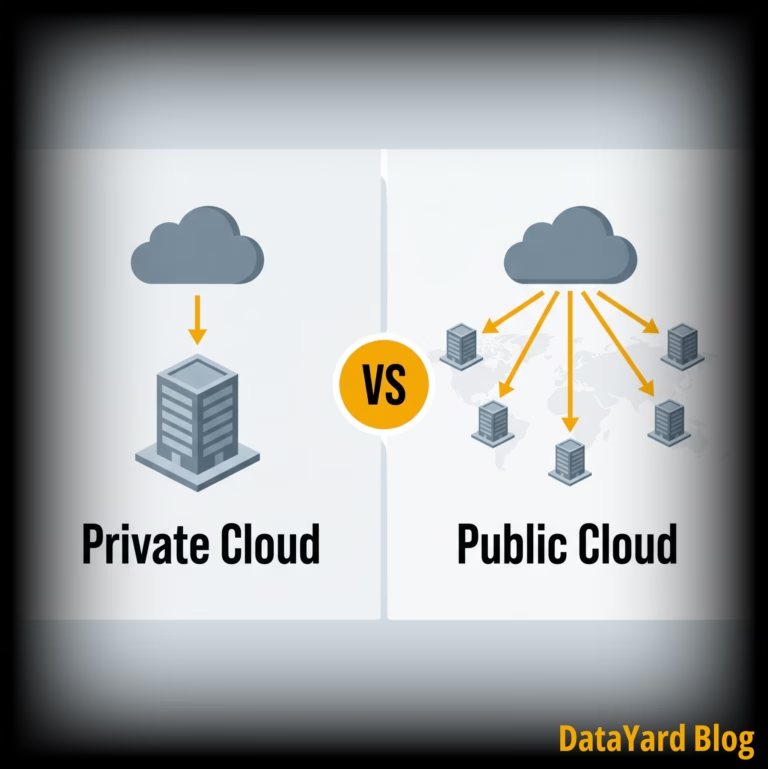
- Implementing private cloud infrastructure
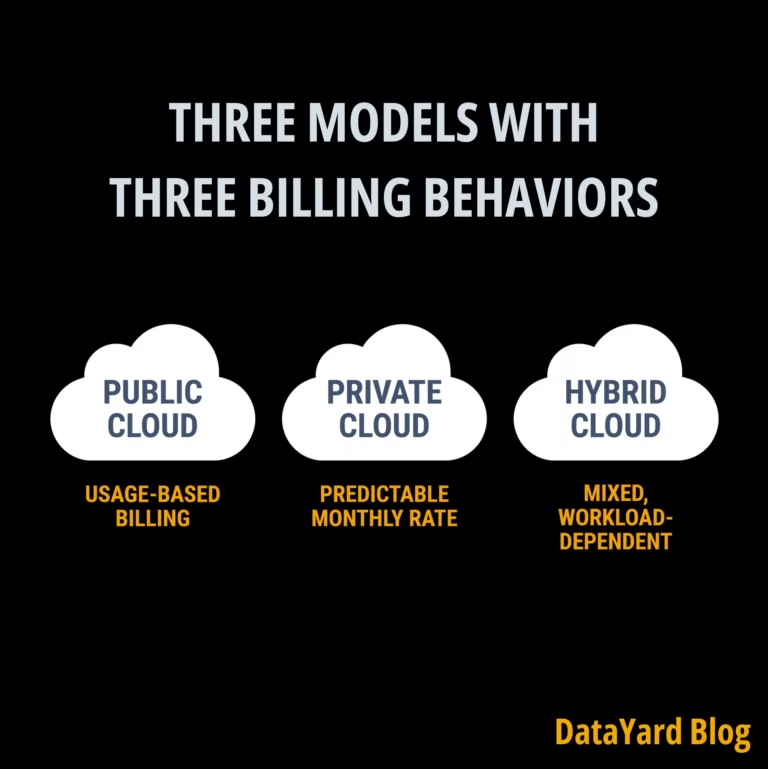
- Integrating hybrid cloud capabilities
- Improving monitoring and security
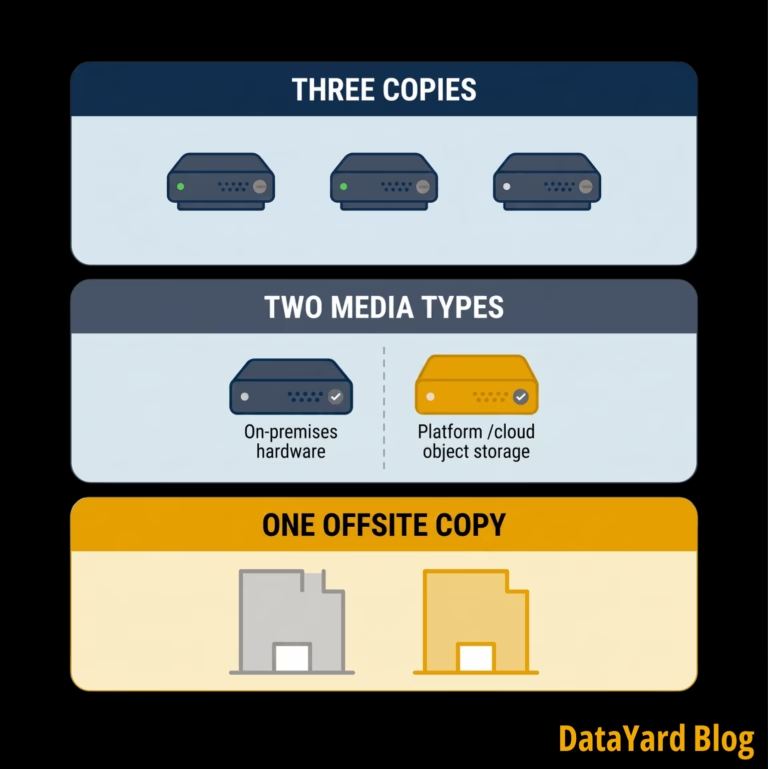
- Strengthening backup and disaster recovery
This allows manufacturers to extend the life of stable applications while reducing infrastructure risk. One of the most effective tools in that modernization toolkit is hybrid cloud, and it is a particularly good fit for how manufacturers operate.
Why Hybrid Cloud Works Well for Manufacturers
A hybrid cloud combines private infrastructure with cloud services. According to the Flexera 2026 State of the Cloud Report, 73% of organizations now operate using a hybrid cloud strategy, combining private server infrastructure with other cloud services.
For manufacturing environments, this typically means:
- Legacy systems, domain controllers, or on-prem file servers operating in an on-prem server environment.
- Other cloud environments used for business-critical applications, scaling, and/or disaster recovery.
- Secure connectivity between facilities.
A Practical Modernization Roadmap
Most successful modernization projects follow a phased approach. Below are the four steps many companies take to modernize their systems.
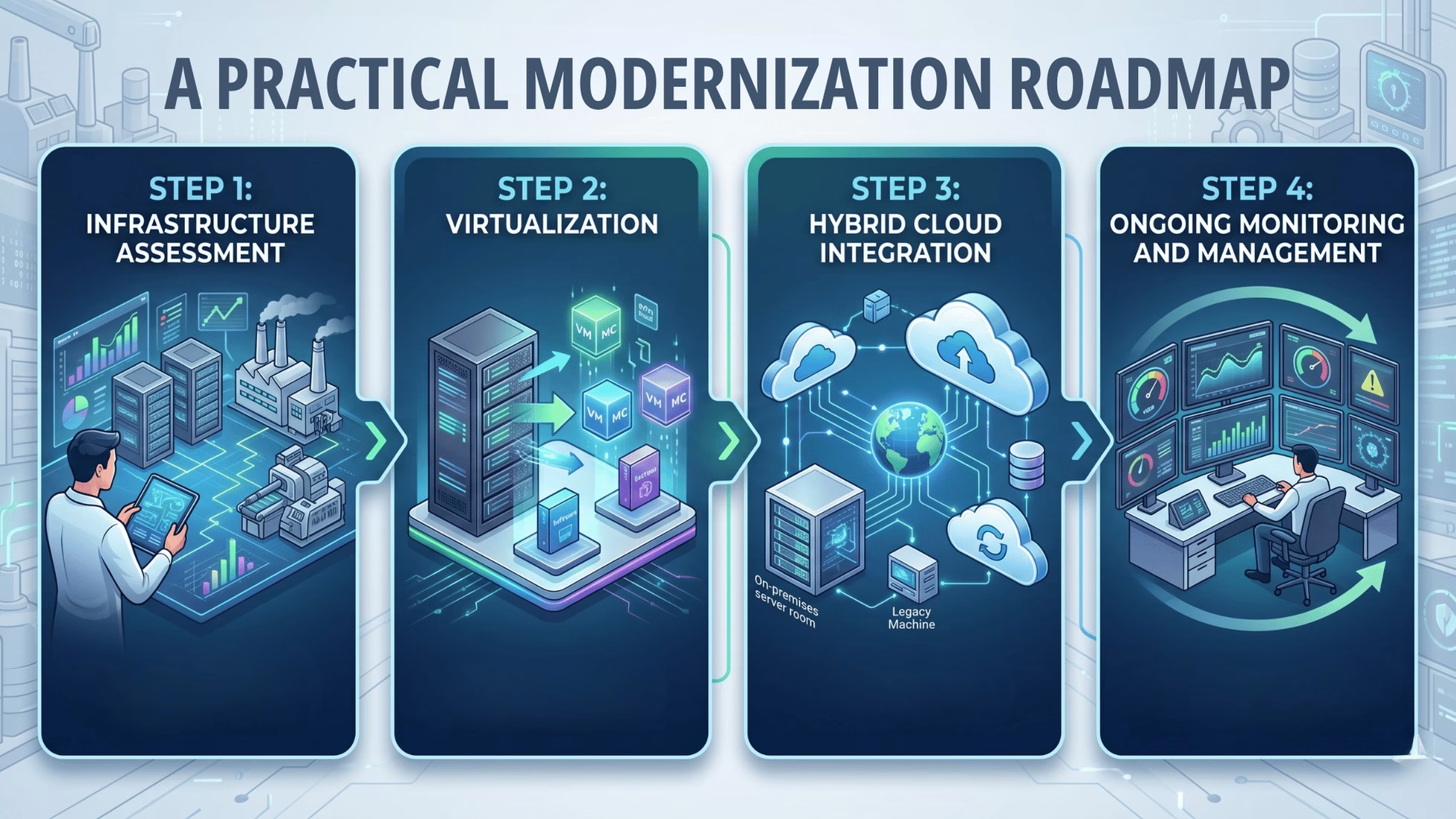
Below are the four steps many companies take to modernize their systems.
Infrastructure Assessment
Identify critical workloads, aging hardware, resource utilization, and operational dependencies.
Virtualization
Migrate systems from aging physical hardware to virtual infrastructure.
Hybrid Cloud Integration
Maintain a small physical server footprint on-prem to support legacy systems or domain services, but rely on cloud resources for business-critical apps, scalability, disaster recovery, and off-site backups.
Ongoing Monitoring and Management
Modern infrastructure requires continuous monitoring, patching, and proactive security management.
The Business Benefits of Modernizing Infrastructure
Modernizing legacy infrastructure delivers measurable benefits and is often the most practical path forward for manufacturing environments.
Modernization benefits include:
- Improved system reliability
- Reduced downtime risk
- Stronger cybersecurity protections
- Improved scalability and growth potential
- More predictable infrastructure costs
Most importantly, modernization via virtualization allows manufacturers to improve their IT environment without major disruption to production systems.
Choosing the Right Partner to Modernize Legacy Systems
Legacy system modernization doesn't have to mean replacing the systems that keep your business running. With the right infrastructure strategy, manufacturers can modernize around existing applications while improving reliability, security, and scalability. DataYard works with manufacturers to modernize infrastructure using virtualization, private cloud, and hybrid cloud environments designed to support critical production systems while minimizing operational disruption.
What to Look for in a Modernization Partner
Manufacturers evaluating infrastructure providers should prioritize:
Experience with Manufacturing Environments
Industrial systems often require custom networking and multi-site connectivity.
Reliability and Uptime
Infrastructure supporting production must prioritize stability and availability.
Security
Modern environments should include:
- Network segmentation
- Continuous monitoring
- Automated patching
- Secure backups
- Disaster recovery plans
Responsive Support
Manufacturers typically operate with lean IT teams and can benefit from providers offering direct engineering support.
Let's Figure It Out Together
Choose the right partner, and the results speak for themselves. DataYard checks all of those boxes. If you're ready to evaluate your infrastructure and start building a path forward, our team is ready to help.