
Data Center Power Redundancy: How DataYard’s Dayton Facility Is Built
Data center power redundancy is about more than just backup


In this blog, we walk through the engineering patterns that keep websites responsive when traffic compresses into a short, intense window: hybrid burst models, pre-warmed virtual machines, warm pools, coordinated scaling triggers, and full-stack readiness. These patterns aren’t theoretical — they’ve been tested in environments handling nearly 10,000 requests per second for a billion-dollar lottery website, which we’ll explore below.
The honest answer? The best cloud hosting partner for your scaling websites isn’t just about a provider — it’s the architecture designed for your peak moments.
Public cloud platforms like AWS, Google Cloud, and Azure offer elastic infrastructure. Elasticity alone doesn’t stop a website from freezing at 9:02 AM when your marketing campaign launches and thousands of users hit your site at once.
Every team has a story. A product launch that turned into a timeout page. A ticket drop that melted checkout. A flash sale that lit up Slack with alerts at the worst possible moment. These failures rarely happen because “the cloud went down.” They happen because the system was designed to function well for an average day — not for a compressed surge of demand.
High-traffic events tend to follow a predictable pattern: steady traffic for long periods, followed by a sharp surge, and then a return to normal levels. These spikes often occur during product launches, ticket releases, flash sales, seasonal promotions, live events, and other time-sensitive moments that concentrate high demand into a short window.
Many traditional hosting plans aren’t designed for this type of compressed traffic surge. They’re typically built for either average usage or peak intensity — not both.
Hybrid cloud architecture can help you prepare for this reality. Rather than provisioning things at permanent peak capacity — which can be costly and inefficient — a hybrid model maintains a stable baseline on private or managed infrastructure and adds short-term public cloud burst capacity (such as AWS or Azure) when demand increases.
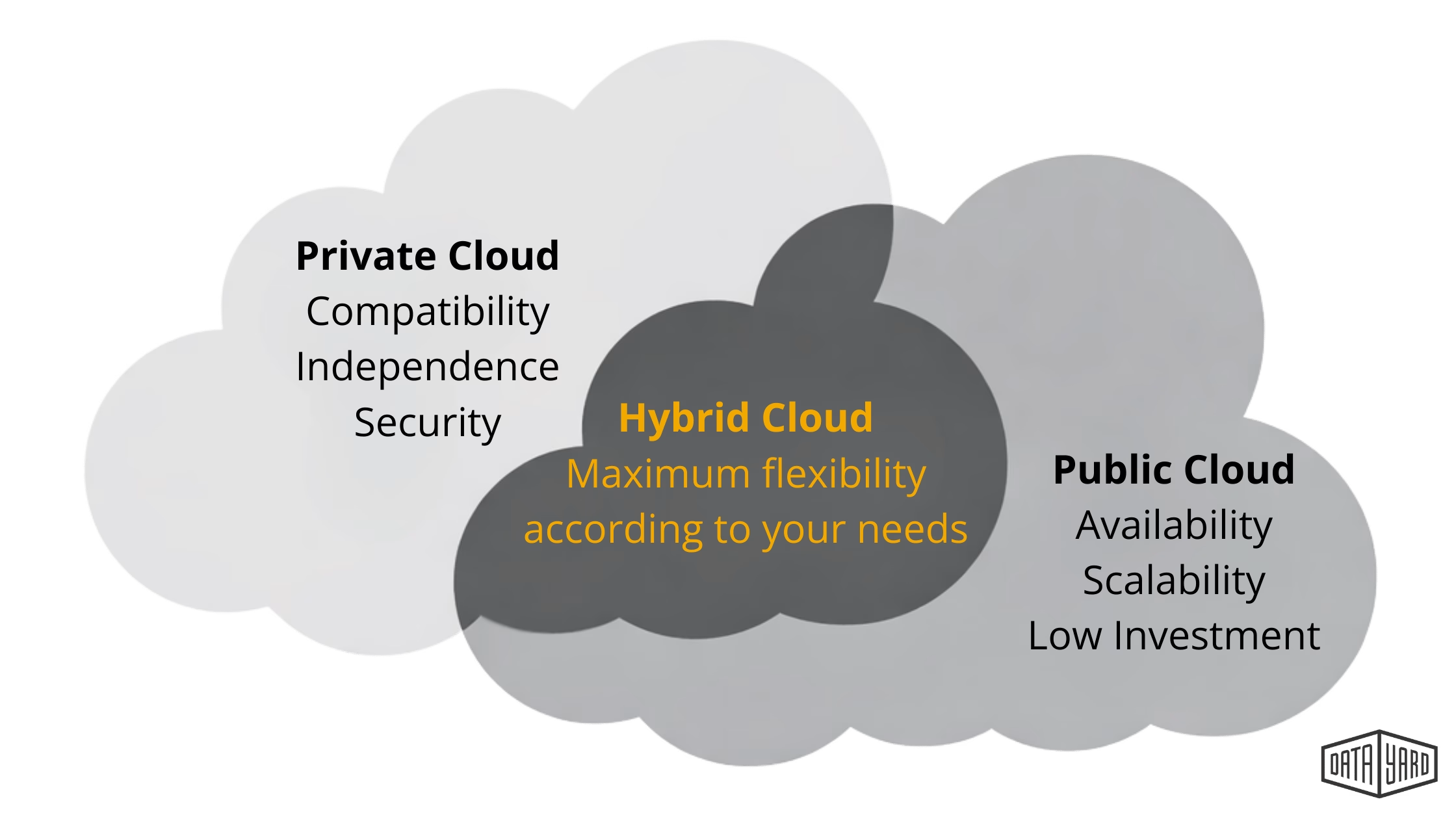
This approach allows organizations to scale deliberately and predictably, expanding capacity before a surge impacts performance, instead of reacting after issues appear.
1. Pre-Warmed Instances & Warm Pools
Cold instances must boot, pull images, initialize run times, and warm caches. That can take 30 seconds to a few minutes — long enough to lose revenue.
Warm pools keep pre-staged instances ready to accept traffic, dramatically reducing provisioning delays when a surge begins.
2. Pre-Allocated Networking & Edge Rules
Burst traffic doesn’t just hit application servers.
It also affects:
Pre-configured edge caching rules ensure that read-heavy traffic — such as landing pages or catalog views — is absorbed at the edge, reducing origin server strain and improving performance during spikes.
3. Database Readiness
Databases are often the first component to fail under intense load.
Reliable scaling requires:
The best cloud hosting for scaling websites accounts for these layers together — not just compute.
Not all cloud environments are designed for high-demand bursts. Understanding the landscape helps you choose the right architecture for your operational needs, internal expertise, and traffic patterns.
Public Cloud (AWS, Azure, Google Cloud).
These platforms offer elastic compute across global regions and powerful automation tools. They provide virtually unlimited scale, but they also require strong architectural discipline, cost governance, and in-house cloud engineering expertise. Without careful configuration and ongoing management, scaling can become complex and expensive.
Developer-Focused Platforms.
Some platforms prioritize ease of deployment and simplified management. They work well for startups and rapid iteration, helping teams move quickly without heavy infrastructure overhead. However, they may encounter performance ceilings during intense, short-lived traffic spikes or complex hybrid scaling scenarios.
Hybrid Cloud & Managed Infrastructure.
Hybrid architecture combines private cloud stability with staged public cloud burst capacity. It is designed for predictable traffic windows, coordinated full-stack scaling, and cost control. Rather than relying purely on reactive auto-scaling, it emphasizes planning, testing, and operational readiness across compute, networking, caching, and database layers
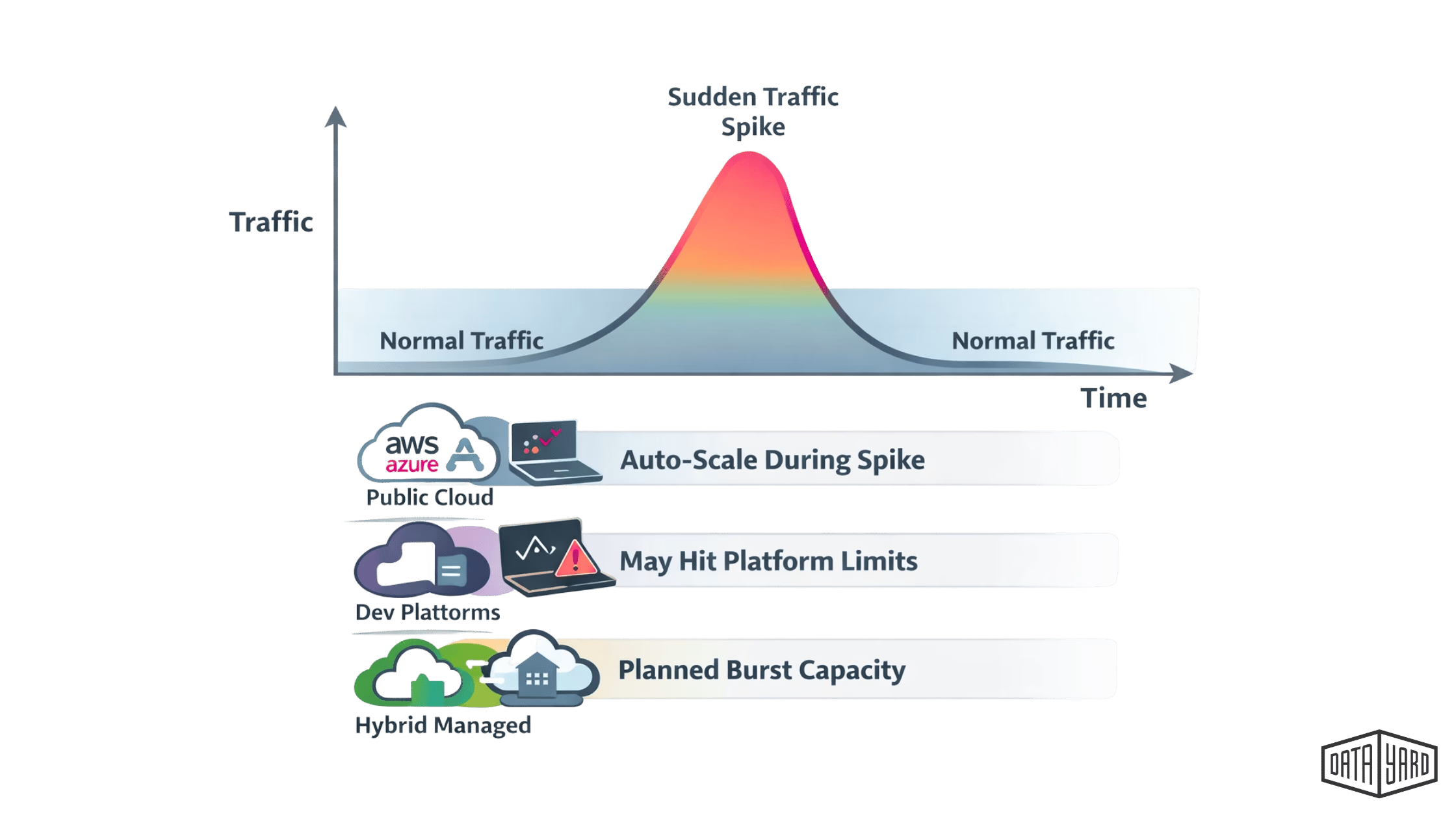
The right model depends on your team’s resources, expertise, and tolerance for risk during high-traffic events.
At DataYard, we bring those approaches together. We’ve engineered our own stable private cloud where clients run their core workloads, and we integrate AWS for staged burst capacity when traffic demands it. Our Ohio-based engineering team plans and coordinates scaling before (not during) your critical moments.
Our hybrid cloud model is built around predictable traffic patterns, scheduled events, and known demand windows. Rather than relying purely on reactive auto-scaling, we use forecasting, historical data, and hands-on oversight to expand capacity intentionally and return it to baseline when the surge passes.
We believe scaling should be deliberate, tested, and reliable. That means experienced engineers are directly involved in preparing your environment for high-traffic events — giving you operational confidence, cost savings, and reliable performance when it matters most.
Auto-scaling is commonly misunderstood. Adding instances on demand increases resources, but does not remove architectural bottlenecks.
Most traffic spikes are short and intense. If auto-scaling triggers too late, users could experience slow pages or 5xx errors before capacity stabilizes. Even after new instances come online, they still need to warm caches and initialize services.
Auto-scaling works best as one layer of a coordinated system, not as the entire strategy.
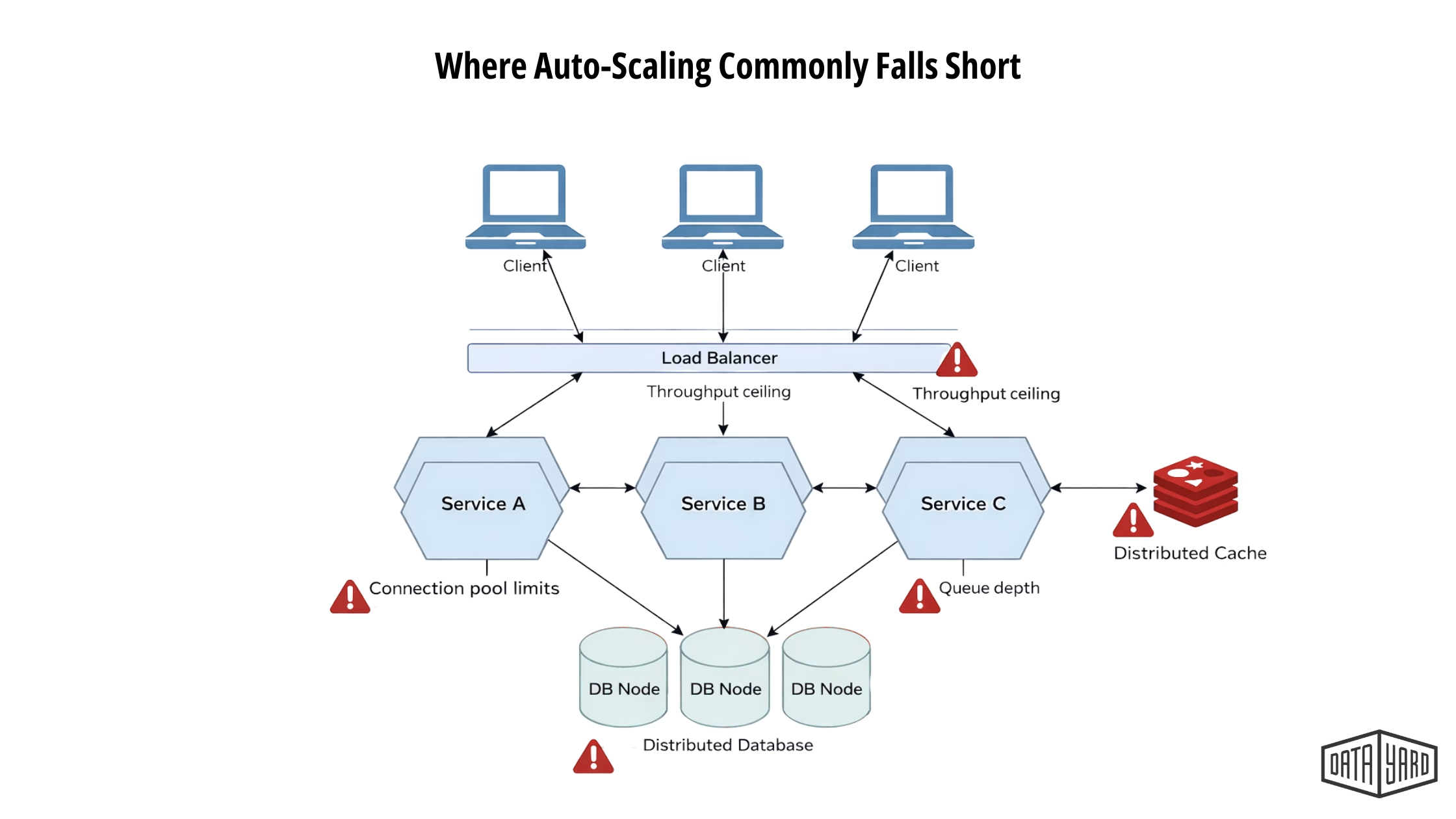
Where auto-scaling commonly falls short:
The common theme? Scaling must be coordinated across compute, networking, caching, storage, and security. Multi-cloud environments introduce additional complexity, which is why cost optimization and performance management remain major challenges across the industry.
When sites fail during a traffic spike, it’s rarely because the cloud provider is unavailable. It’s because one component of the hosting environment hits a resource ceiling, and the infrastructure is unable to accommodate the additional traffic.
Databases are frequent culprits. Slow queries, lock contention, or connection pool exhaustion can create cascading timeouts.
Load balancers and WAFs are often overlooked. A device that handles 5,000 concurrent connections comfortably may begin dropping packets at 15,000 — regardless of backend capacity.
Scaling trigger lag is another common issue. CPU-based triggers react after the load has already arrived. Request-rate triggers paired with pre-warmed instances enable more proactive scaling.
The best cloud hosting for scaling websites anticipates these failure points before they surface.
The best cloud hosting for scaling websites anticipates these failure points before they surface.
Billion-dollar jackpots create one of the most compressed traffic patterns in consumer software. Demand does not build gradually — it arrives within minutes, as visitors rush to check their numbers after the drawing.
During multiple MegaMillions jackpot events, traffic approached nearly 10,000 requests per second.
DataYard’s challenge wasn’t simply adding infrastructure. It was ensuring that every layer of the stack was ready before the first surge arrived.
Our approach: a hybrid, predictive scaling plan, combining stable private infrastructure with staged public cloud burst capacity.
→ Pre-warmed caches.
→ Warmed database replicas.
→ Pre-tested networking.
→ Forecasting models based on historical draw data.
→ Capacity expanded roughly two hours before the drawing and contracted after peak traffic subsided.
The result: stable user performance during high-traffic windows — without maintaining peak infrastructure 24/7. This event-based hybrid cloud strategy avoided permanent overprovisioning while controlling long-term infrastructure spend.
You don’t need 10,000 requests per second to experience scaling problems.
Even moderate surges can overwhelm systems built only for normal daily traffic. The best cloud hosting for scaling websites is built on a team who designs architecture that expands for traffic surges before they impact performance.
It’s easy to assume that high availability requires always-on peak capacity. That approach works, but it’s typically very expensive.
One client operates a sports platform with predictable peak seasons. During active competition, traffic increases significantly. During the off-season, demand returns to baseline.
By forecasting those seasonal patterns, infrastructure is scaled before peak windows and returned to baseline afterward. Performance remains consistent, and costs remain aligned with actual usage.
Modern scaling strategies follow this pattern:
For example, maintaining 20 baseline instances and staging 80 additional instances for a two-hour event window can deliver comparable performance to running 100 instances year-round, at significantly lower average monthly cost.
The principle remains consistent, regardless of workload size.
You don’t need millions of concurrent users to benefit from these patterns. Any platform with short, intense demand windows faces the same architectural challenge at a smaller scale.
These architecture principles apply to many industries:
Any organization with short, intense demand windows benefits from hybrid planning and coordinated scaling.
When evaluating the best cloud hosting for scaling websites, focus on overall operational readiness and clearly define what matters most to your organization.
How do you support steady-state traffic plus burst capacity?
Can you stage warm pools in advance?
What are your provisioning lead times?
How is expanded capacity billed?
Do you test and rehearse high-traffic events?
Are engineers available during peak windows?
Take a moment to define what the best cloud hosting provider looks like for your team.
Your answers will determine whether a purely elastic public cloud model is sufficient, or whether a managed partner with a customized environment is the better fit.
At DataYard, we focus on combining private cloud stability, staged public cloud burst capacity, and hands-on 24/7/365 engineering oversight to support high-demand events with confidence and cost discipline. The right partner should align with your priorities, not force you to adapt to theirs.
Have questions about your scaling strategy?
The short answer: the best cloud hosting for scaling websites is one where the provider and architecture are built with your peak moment in mind, not just your average day.
Engineered scalability means infrastructure modeled around traffic behavior. It means coordinated scaling across the full stack — compute, databases, cache, and network. It means hybrid flexibility that uses managed baseline capacity and short-term public cloud bursts, with proactive capacity planning and rehearsed playbooks rather than purely reactive triggers. And it means cost control that returns resources to baseline after the surge passes.
High-traffic moments don’t wait. Your infrastructure shouldn’t either.
We’ll walk through our hybrid scaling strategies and automation frameworks — including lessons learned from environments handling traffic approaching 10,000 requests per second during historic billion-dollar Mega Millions lottery jackpots
March 25, 2026
11:00 AM Eastern
45 minutes
Click “Register Today” below to save your virtual seat!
Data center power redundancy is about more than just backup
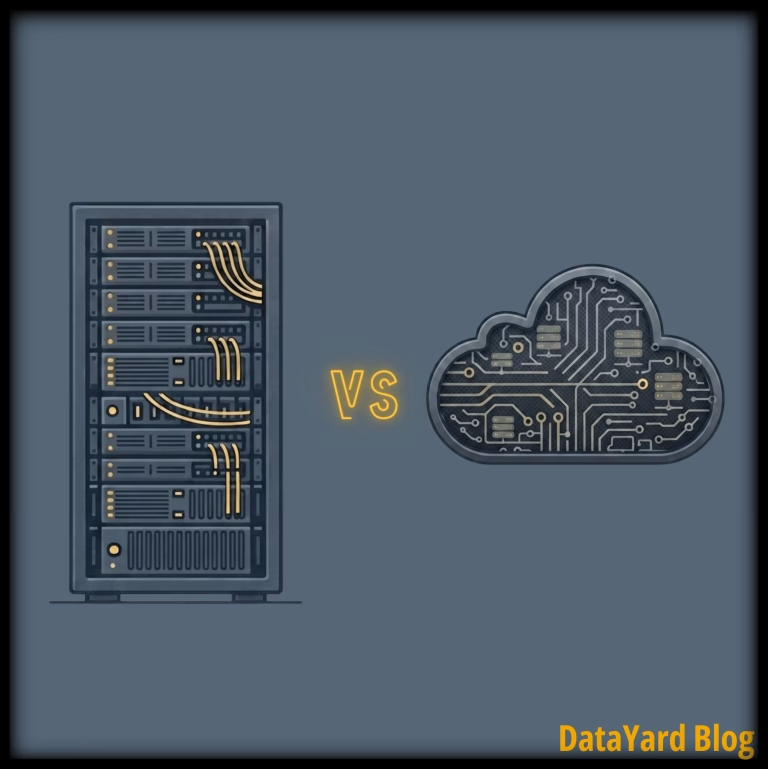
For years, businesses heard one message: move everything to the
On June 17, 2026, DataYard and Huntress hosted a live