EDR vs. Antivirus: What’s the Difference and Why You Might Need Both

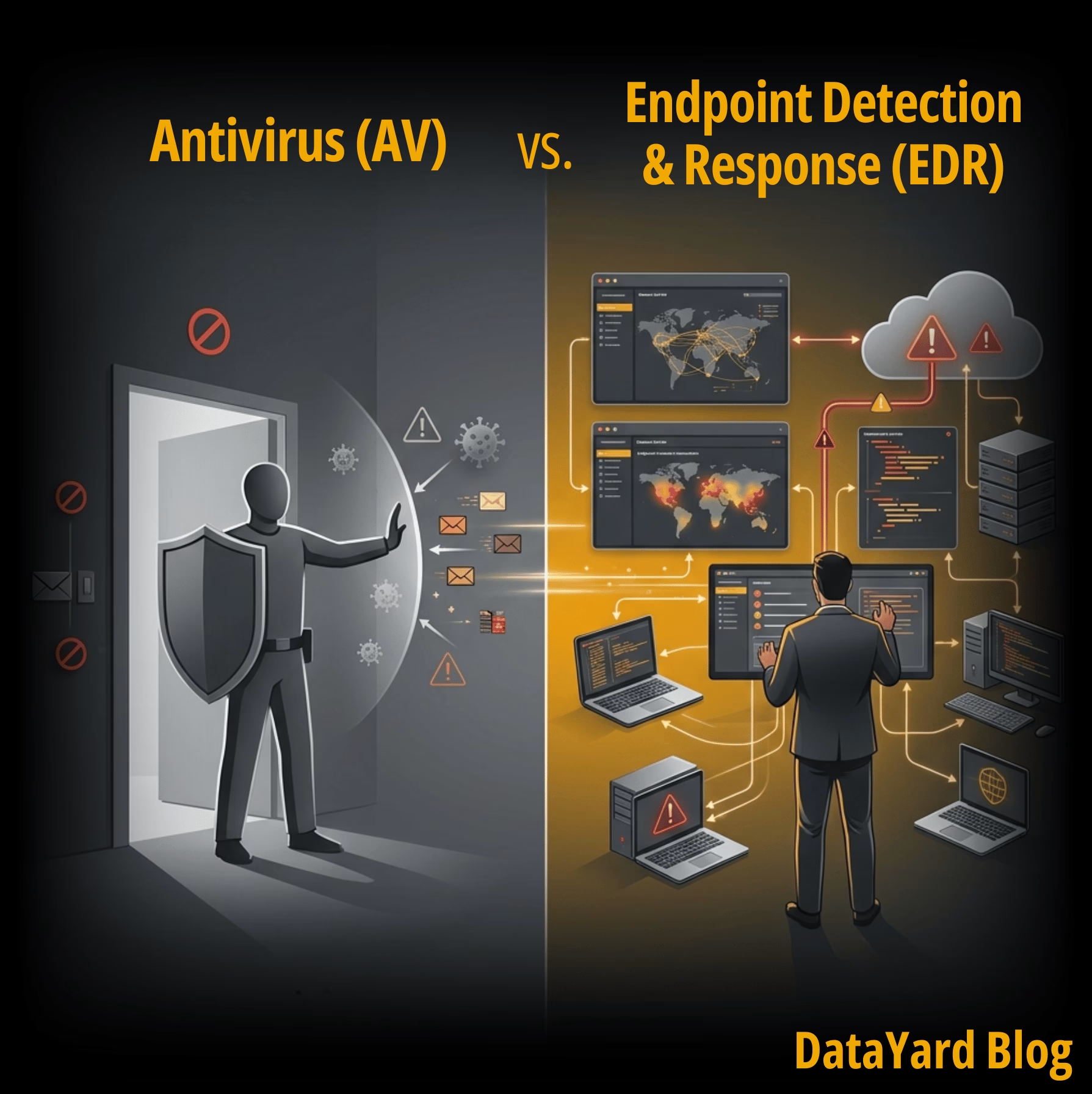
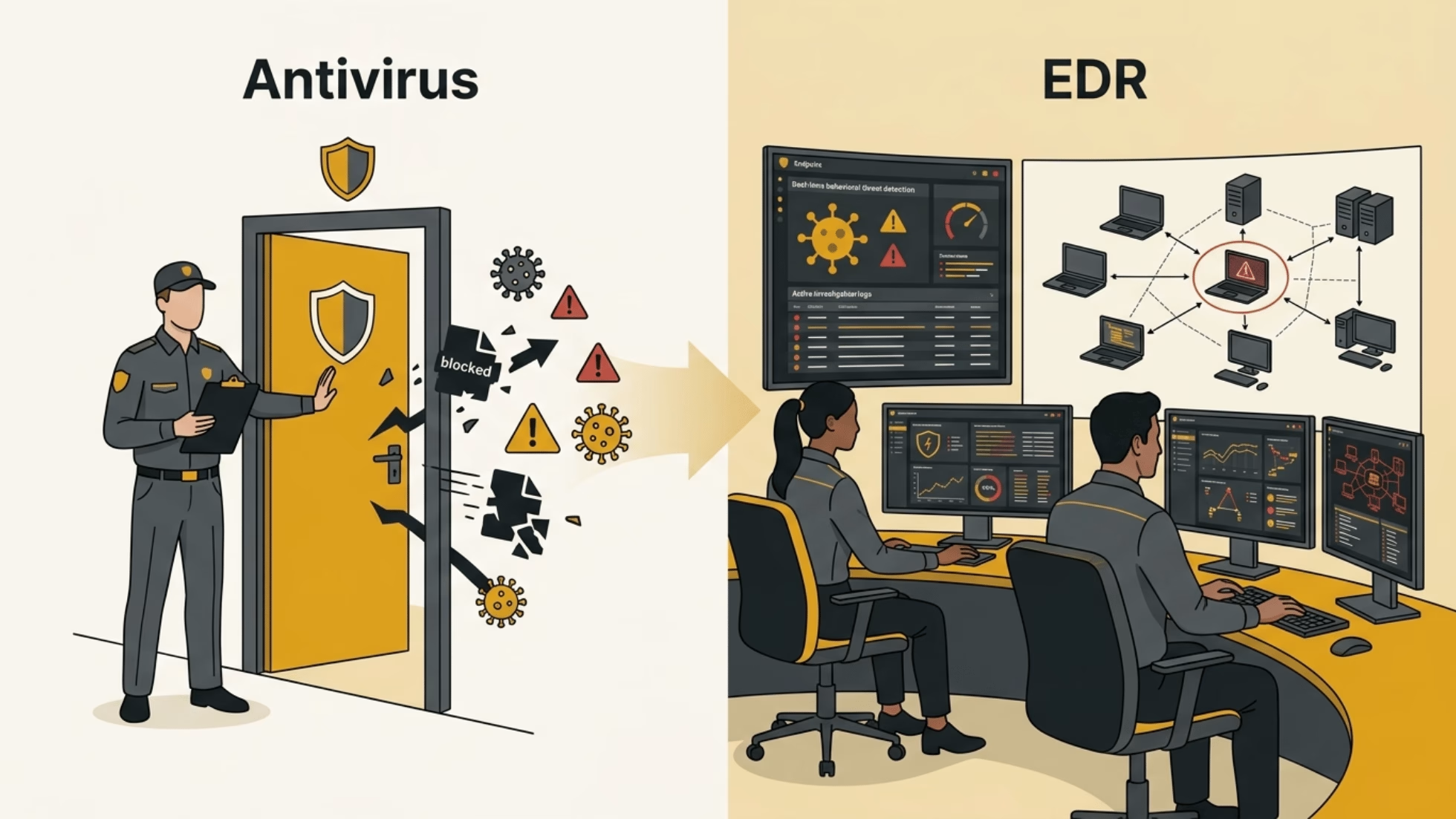
Antivirus vs. EDR illustration showing a security guard blocking threats at a doorway to represent antivirus protection, alongside a cybersecurity analyst monitoring laptops, servers, and multiple endpoints in real time to represent Endpoint Detection & Response (EDR).

EDR vs. Antivirus: What’s the Difference and Why You Might Need Both

Antivirus vs. EDR illustration showing a security guard blocking threats at a doorway to represent antivirus protection, alongside a cybersecurity analyst monitoring laptops, servers, and multiple endpoints in real time to represent Endpoint Detection & Response (EDR).

EDR vs. Antivirus: What’s the Difference and Why You Might Need Both

Antivirus vs. EDR illustration showing a security guard blocking threats at a doorway to represent antivirus protection, alongside a cybersecurity analyst monitoring laptops, servers, and multiple endpoints in real time to represent Endpoint Detection & Response (EDR).
Cybersecurity

EDR vs. Antivirus

As Endpoint Detection & Response (EDR) becomes more widely discussed, a lot of businesses are asking the same question: Does EDR replace antivirus? Or do we need both? The short answer for most businesses: both.

EDR and antivirus are built to solve different security problems, and understanding where each one fits helps you make smarter decisions about your environment. Antivirus focuses on blocking known threats before they get in. EDR provides deeper visibility into endpoint activity and helps organizations investigate and contain threats that slip through traditional defenses.

For most organizations, the stronger approach isn’t choosing one over the other — it’s understanding how they work together. Let’s take a closer look at how each works, where they differ, and why so many organizations are using both.

Table of Contents

Key Takeaways

  • Antivirus and EDR solve different cybersecurity problems.
  • Antivirus helps block known threats before they can execute.
  • EDR provides deeper visibility into suspicious endpoint activity and helps detect, investigate, and contain threats.
  • Many businesses use antivirus and EDR together as part of a layered security strategy.
  • Managed EDR combines endpoint monitoring with human investigation and response support.
  • EDR can help organizations reduce operational disruption during cybersecurity incidents by improving visibility and response times.
  • Join DataYard and Huntress on June 17, 2026 for a free EDR webinar.

What Is Antivirus Software?

Traditional antivirus (AV) software is designed to identify and block known malicious files, applications, and behaviors before they can cause damage.

Think of antivirus as a security guard checking IDs at the front door. It knows what threats look like, and it stops the ones it recognizes from getting in.

Modern antivirus platforms have come a long way from their early days and often include features like:

  • Malware and ransomware protection
  • Web and email scanning
  • Behavioral analysis
  • Automatic quarantining of suspicious files

For many businesses, antivirus remains an important first layer of defense -- one that’s effective at stopping a wide range of routine, well-known threats.

The limitation is: antivirus is most effective against threats it already recognizes. Newer, more sophisticated attacks that don’t match known signatures can pass through undetected.
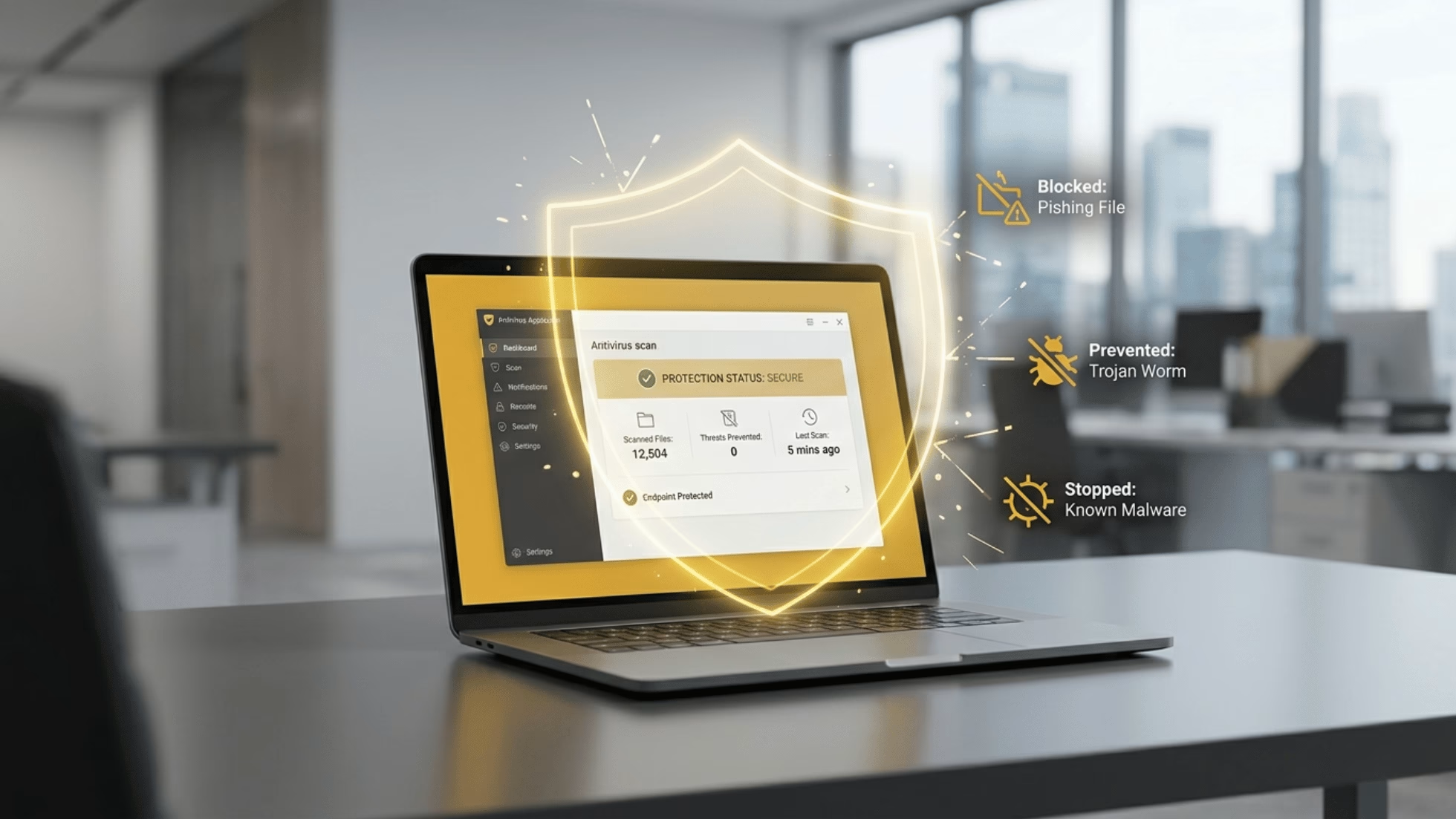
Antivirus software protecting business endpoints — first layer of defense against known cybersecurity threats
Traditional antivirus software is an important first layer of defense, but it is most effective against threats it already recognizes.

What Is Endpoint Detection & Response (EDR)?

EDR goes a step further than antivirus. Rather than focusing on blocking known threats, EDR continuously monitors behavior across your endpoints -- workstations, laptops, servers, and remote employee devices -- and flags activity that looks suspicious based on users' typical working patterns, even if it doesn't match a known signature.

Going back to the security guard analogy: if antivirus is the guard checking IDs at the door, EDR is the broader security team monitoring cameras throughout the building, investigating anything that looks off, and responding when something abnormal happens -- even after someone’s already inside.

EDR platforms give organizations the ability to:

  • Detect unusual or suspicious behavior in real time
  • Investigate incidents quickly with full context
  • Isolate affected systems before threats can spread
  • Reduce lateral movement across a network
  • Respond faster when something goes wrong

Fast response times matter more than many businesses realize. The window between when a threat is detected and when it’s contained can be the difference between a minor incident and days of downtime.
EDR platform monitoring endpoint activity — security team reviewing suspicious behavior and threat investigation tools
EDR continuously monitors endpoint activity across your environment, flagging suspicious behavior even when it doesn’t match a known threat signature.

Why EDR Is Becoming More Important

Cybersecurity threats have become increasingly focused on endpoints, including the workstations, laptops, and servers your employees use every day.

According to Huntress, attackers frequently rely on legitimate administrative tools, stolen credentials, remote access software, and “living off the land” techniques that may not appear malicious to traditional antivirus software alone. These types of attacks are designed to blend in, and that’s exactly what makes them so difficult to catch with prevention-only tools.

It’s one of the main reasons EDR adoption has grown significantly in recent years. Rather than relying solely on known malware signatures, EDR helps organizations identify suspicious behaviors and investigate unusual activity that may indicate compromise.

Modern EDR platforms can also help reduce response times by:

  • Alerting IT teams to suspicious activity quickly
  • Providing behavioral visibility into endpoint activity
  • Isolating affected devices during active incidents
  • Supporting faster investigation and remediation

For businesses with remote employees or operationally-critical systems, that improved speed and visibility can make a meaningful difference in how disruptive a security incident ends up being.

Huntress reports that 89% of users agree that Managed EDR stopped a threat that would have otherwise significantly impacted their business -- a strong indicator of why managed detection is becoming a go-to addition for lean IT teams.

EDR vs. Antivirus: Key Differences

While both tools improve endpoint security, they work differently and serve different purposes.

Antivirus focuses on prevention. It’s built to block known malicious files and activity before they execute -- quietly, automatically, and with minimal input needed from your team.

EDR focuses on visibility and response. It’s built to a) catch what slips past those initial prevention layers, b) give your team the context to understand what happened, and c) provide the tools to contain it and remediate the issue quickly.

Antivirus is largely automated. It runs in the background and handles routine threats without a lot of end-user investigation. As long as your AV service is installed and kept up-to-date, there isn't much involvement required from IT.

EDR provides deeper investigation capability. EDR platforms typically include threat timelines, behavioral monitoring, forensic visibility, and containment features -- tools that help IT teams understand the full scope of an incident, not just an alert that "something happened".

Neither tool is a complete security strategy on its own. Together, they cover a much broader range of threats.

Feature Antivirus EDR
Blocks known malware Yes Yes
Behavioral monitoring Limited Extensive
Threat investigation tools Minimal Advanced
Endpoint isolation Usually No Yes
Detects suspicious activity Limited Yes
Incident response support Minimal Strong
Visibility into endpoint activity Limited Detailed
Best for Prevention Detection & Response

Not sure if your current security stack has the right coverage? DataYard can help you assess where antivirus and EDR fit into your environment. Contact us or explore DataYard’s cybersecurity services.

Why Many Businesses Use Both

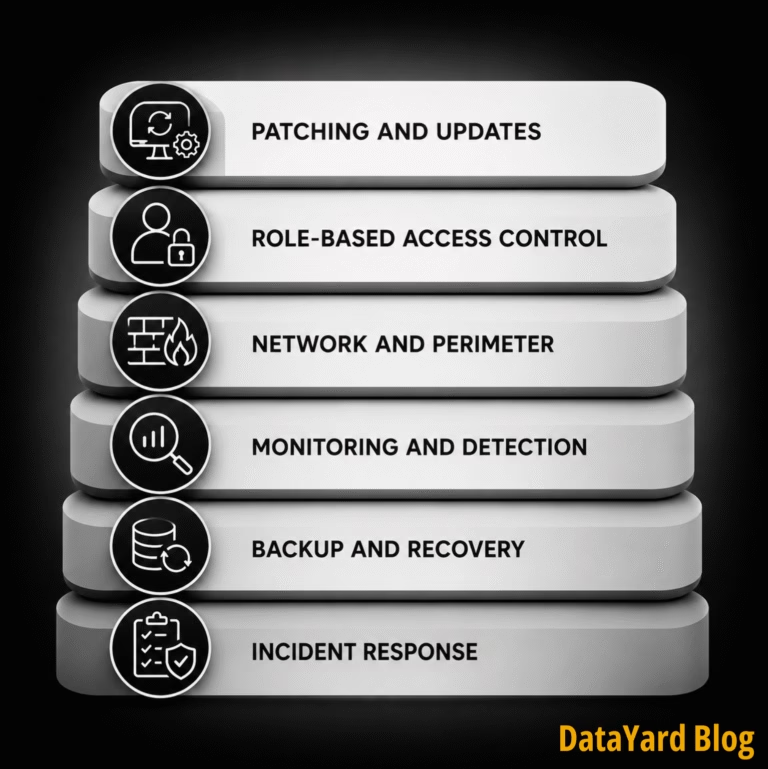
Cybersecurity rarely comes down to a single tool. Most strong security setups are built in layers, and antivirus and EDR are designed to cover different parts of that stack:

  • Prevention -- Stopping known threats before they execute (Antivirus)
  • Detection -- Identifying suspicious activity that bypasses prevention (EDR)
  • Investigation -- Understanding what happened and how far it spread (EDR)
  • Response -- Containing the threat and limiting damage (EDR)

In many cases, antivirus handles routine threats before they ever become incidents. But when something more sophisticated slips past antivirus and firewall protections -- and it does happen -- EDR provides the visibility needed to catch it quickly and limit the damage.

For organizations with remote employees, growing infrastructure, or operationally critical systems, that additional visibility isn’t a nice-to-have; it's what separates a contained incident from a serious disruption.

What Is Managed EDR?

EDR technology provides powerful visibility and response capabilities, but the platform still requires someone to monitor it, investigate alerts, and make decisions when suspicious activity occurs.

That’s where managed EDR comes in.

Managed Endpoint Detection & Response combines EDR technology with active human monitoring and response support. Instead of relying entirely on an internal IT team to review every alert, organizations gain access to experienced security professionals who help investigate suspicious activity and respond to incidents faster.

DataYard partners with Huntress to provide managed EDR services that help organizations:

  • Monitor endpoint activity continuously
  • Investigate suspicious behavior with expert support from Huntress' SOC
  • Respond faster to active threats
  • Reduce alert fatigue for internal IT teams
  • Improve visibility across remote and hybrid environments

For many small and midsize businesses, managed EDR provides access to advanced endpoint security capabilities without needing their own internal security operations center (SOC).

This can be especially valuable for:

  • Manufacturers with operationally critical systems
  • Professional service firms handling sensitive client data
  • Organizations with remote or hybrid employees
  • Growing businesses with limited internal IT resources

Rather than deploying security software and hoping for the best, managed EDR adds an additional layer of human visibility, expertise, and expedited response when it matters most.

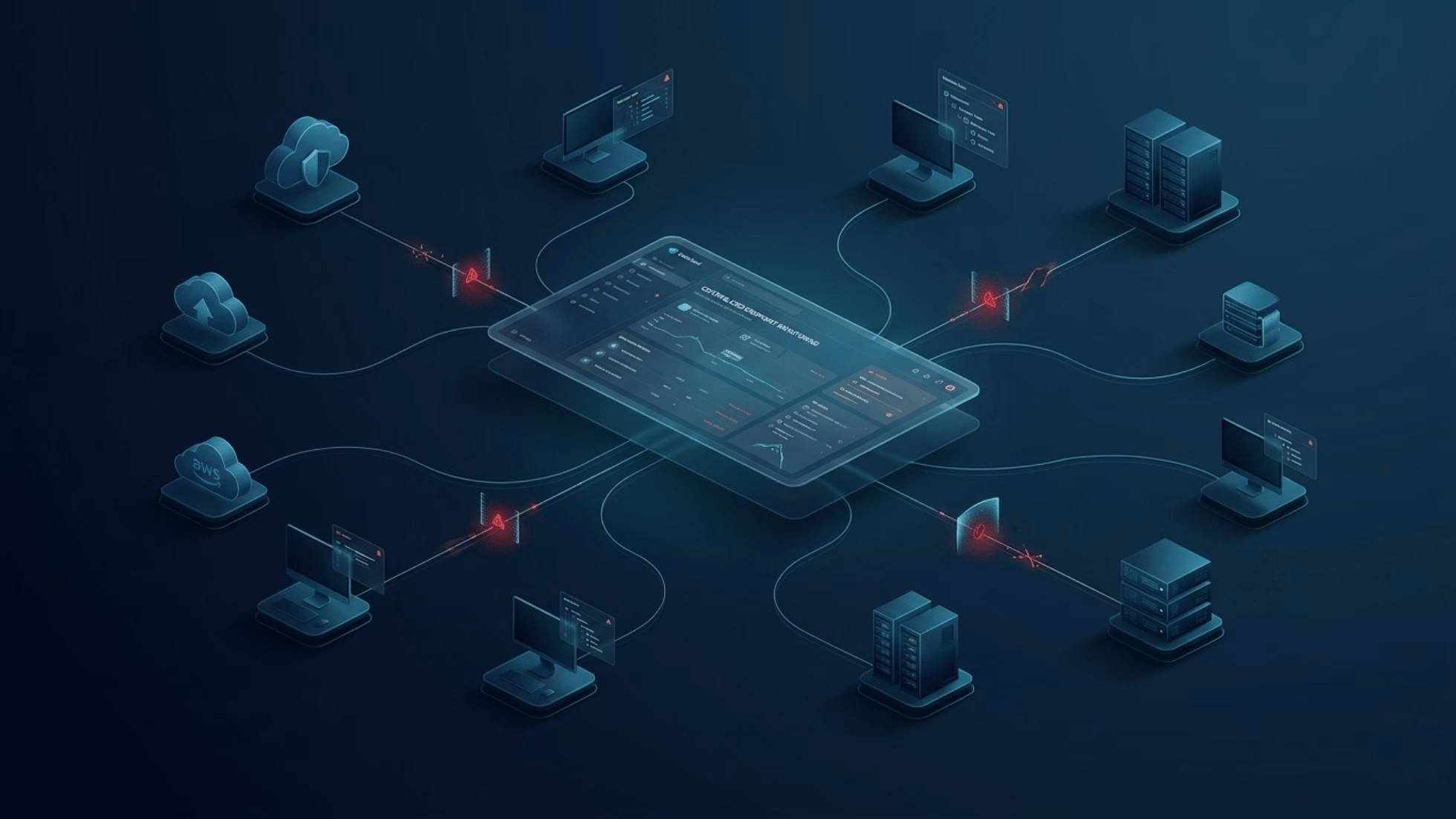
DataYard managed EDR powered by Huntress — endpoint monitoring and response support for small and midsize businesses
Managed EDR combines advanced endpoint technology with human investigation and response -- giving lean IT teams access to enterprise-grade security capabilities.

DataYard offers Managed EDR through our partnership with Huntress. If your organization is looking to improve endpoint visibility without adding to your internal team’s workload, we’re happy to walk through what that looks like for your specific environment. Contact us to start the conversation.

How EDR Saved One of Our Clients

Earlier this year, DataYard responded to an incident that shows exactly why this matters.

Our team received an alert from Huntress — our managed EDR partner — flagging suspicious activity on a client's workstation. A team member had unknowingly downloaded a file that turned out to be a Remote Monitoring & Management (RMM) tool — the kind attackers use to gain unauthorized access to a system and move laterally through a network.

The client's antivirus software didn't catch it. The file didn't match any known malicious signature.

But EDR did. It detected the unusual behavior, isolated the affected device, and the Huntress and DataYard teams had everything contained and resolved within the hour. Without EDR, that same threat could have spread across the client's entire network — potentially causing days (or weeks!) of downtime.

We’re walking through this incident in detail during our upcoming EDR webinar on June 17th, 2026 -- including what triggered the alert, how we responded, and what was prevented.

See It Happen Live Register for the EDR Webinar →

EDR Benefits for All Growing Businesses

For any growing organization, a cybersecurity incident isn’t just an IT problem -- it’s an operational one. Downtime affects production. Data exposure affects client relationships. Recovery takes time your team doesn’t have.

EDR is especially valuable in environments where:

  • Downtime has real consequences for production or revenue
  • Remote work expands the number of endpoints that need monitoring
  • Small internal IT teams are managing large or complex environments
  • Legacy systems create blind spots that traditional tools miss
  • Sensitive client or operational data needs to be protected

The goal of EDR isn’t just stopping malware. It’s giving your team the visibility and response capability to handle incidents faster, and with less disruption, when they happen.

See EDR in Action: Free Webinar on June 17

If you want to see how EDR works in a real environment -- not just in theory -- join us for a free live webinar:

How to Stop Cybersecurity Threats with Endpoint Detection & Response (EDR)

📅 Wednesday, June 17

🕚 11 AM ET

💻 Free to attend

DataYard’s VP of Operations Mike Beagles will walk through a real cybersecurity incident involving EDR detection and containment -- including what triggered the alert, how we responded, and what was prevented. Then Andrew Pantaleon, Technical Account Manager at Huntress, will follow with a live EDR demo showing detection, investigation, and response in real time.

All registered attendees also receive a complimentary 30-minute Security & EDR Assessment after the session.

Final Thoughts

The EDR vs. antivirus question isn’t really an either-or decision for most businesses. Antivirus remains a valuable first layer of protection. EDR adds the visibility and response capability that modern threat environments increasingly require.

When used together, they cover more ground -- from blocking routine threats to detecting, investigating, and containing the ones that don’t look like anything you’ve seen before. As ransomware and endpoint-based attacks continue evolving, many organizations are adding managed EDR services alongside traditional antivirus protection.

If you’d like to talk through what endpoint security looks like for your specific environment, contact the DataYard team. We’re happy to have a conversation about where you stand and what makes sense to add to your security stack.

Ready to Strengthen Your Endpoint Security?

DataYard helps organizations improve operational resilience through managed EDR, 24/7 infrastructure monitoring, patch management, endpoint protection, backup and disaster recovery, and secure cloud architecture. If you’d like to review your current security posture or explore managed EDR options, our team is always happy to help.

Frequently Asked Questions About EDR vs. Antivirus

For most businesses, EDR does not completely replace antivirus. Antivirus remains an important first layer of defense for blocking known threats, while EDR adds visibility, investigation, and response capabilities for suspicious activity that bypasses traditional protections.

Antivirus focuses primarily on prevention by identifying and blocking known malicious files or behaviors. EDR focuses on detecting suspicious activity, investigating incidents, and helping IT teams contain threats that may already be active inside an environment.

Many small and midsize businesses benefit from EDR, especially organizations with remote employees, sensitive data, operationally critical systems, or limited internal IT resources. EDR can help improve visibility and reduce response times during cybersecurity incidents.

EDR platforms can often identify behaviors associated with ransomware activity, such as unusual encryption processes, privilege escalation, or lateral movement. Many EDR tools also include containment features that help isolate affected systems before threats spread further.

Yes. Many organizations run EDR alongside traditional antivirus software as part of a layered security approach. Antivirus helps prevent known threats, while EDR adds detection and response capabilities when suspicious activity occurs.

EDR solutions typically monitor endpoints such as desktop workstations, laptops, servers, remote employee devices, and virtual machines. Some platforms also provide visibility into cloud-hosted systems and hybrid environments.

Response times vary depending on the platform and monitoring setup, but many managed EDR solutions can automatically isolate affected systems and alert security teams within minutes of detecting suspicious activity.

Managed EDR combines Endpoint Detection & Response technology with active human monitoring and response support from cybersecurity professionals. Instead of handling every alert internally, businesses receive help investigating suspicious activity and responding to threats more quickly.

Many small and midsize businesses use managed EDR because they do not have dedicated internal security teams monitoring endpoint activity 24/7. Managed EDR can improve visibility, reduce response times, and help organizations respond more effectively to cybersecurity incidents.

Check out our other blogs