In This Post
What Is a Traditional Data Center?
Almost everything you do online runs through a data center. Searching Google, sending an email, checking your bank balance, scrolling social media, and online shopping: all of it lives on servers in a data center somewhere.
At its core, a data center is simply a building designed to keep servers running around the clock. That takes a lot more than just the servers themselves. It also takes reliable power (with backups), cooling to keep equipment from overheating, physical security, and fast internet connections.
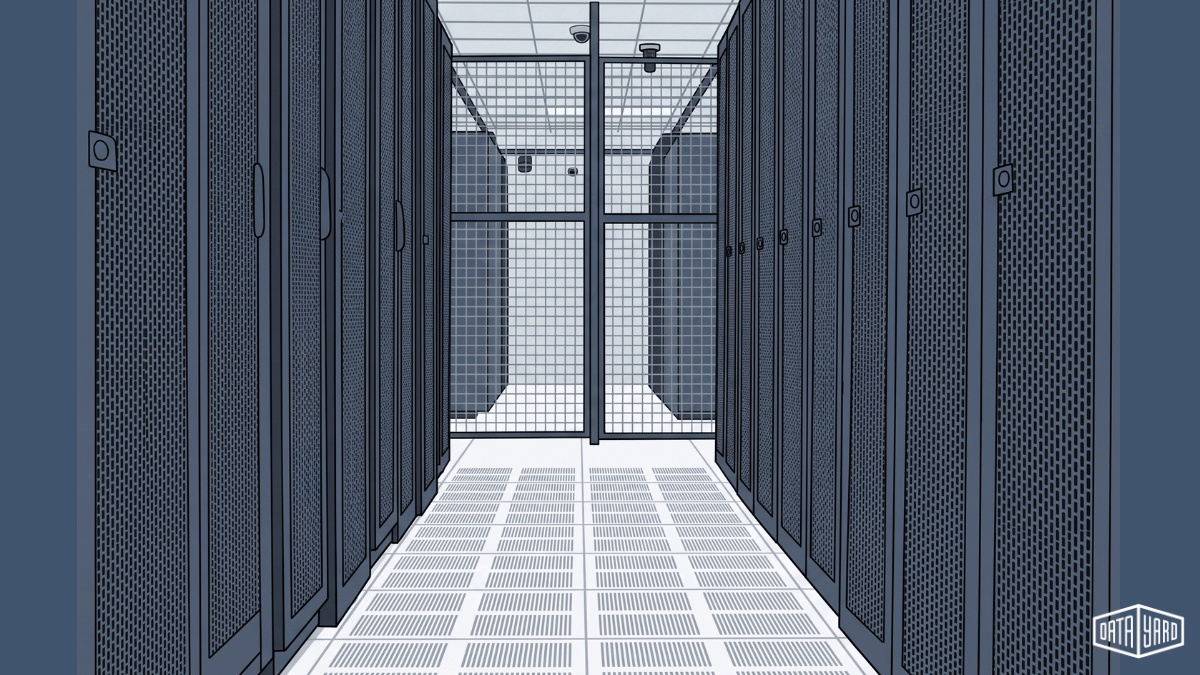
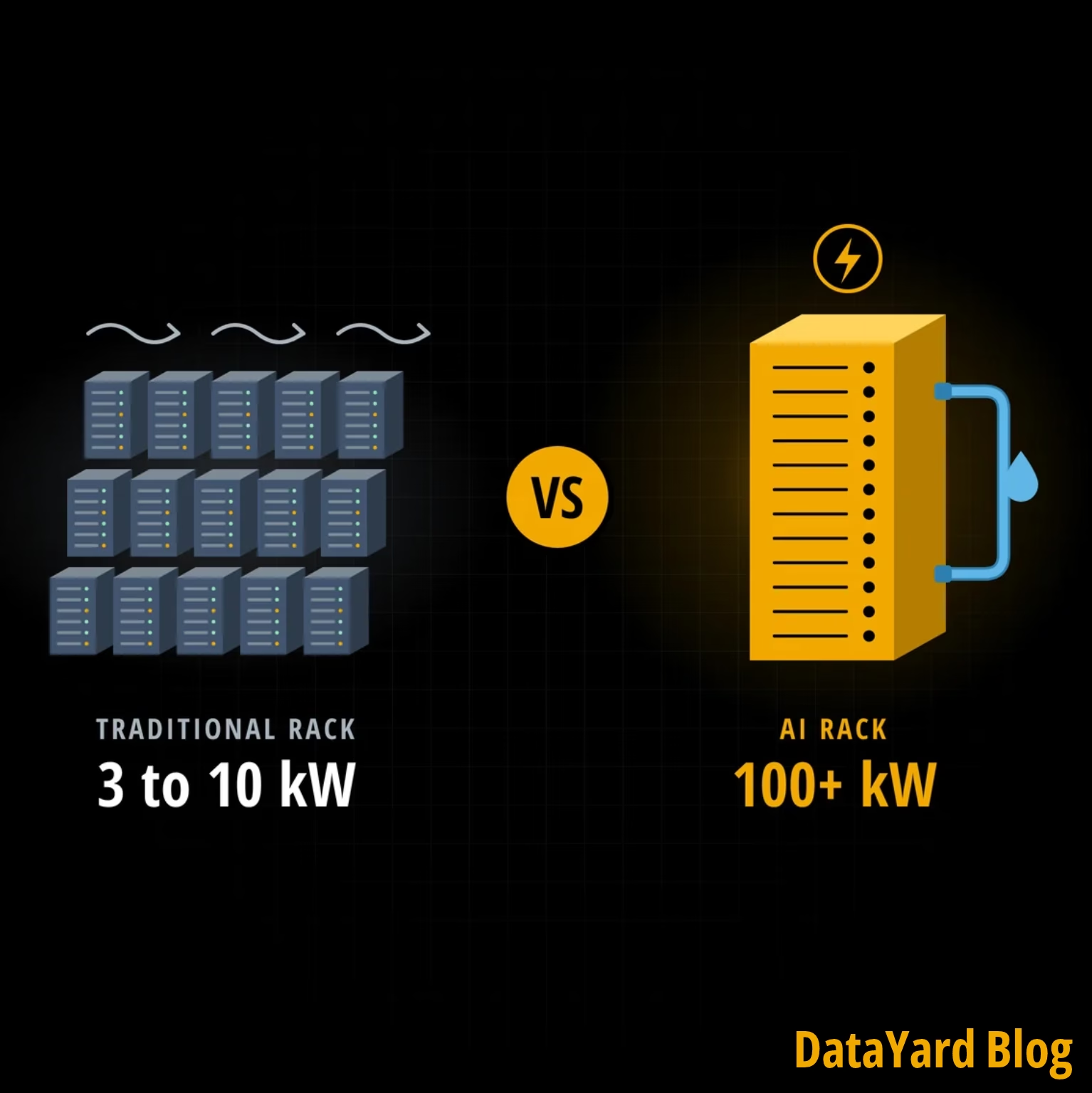
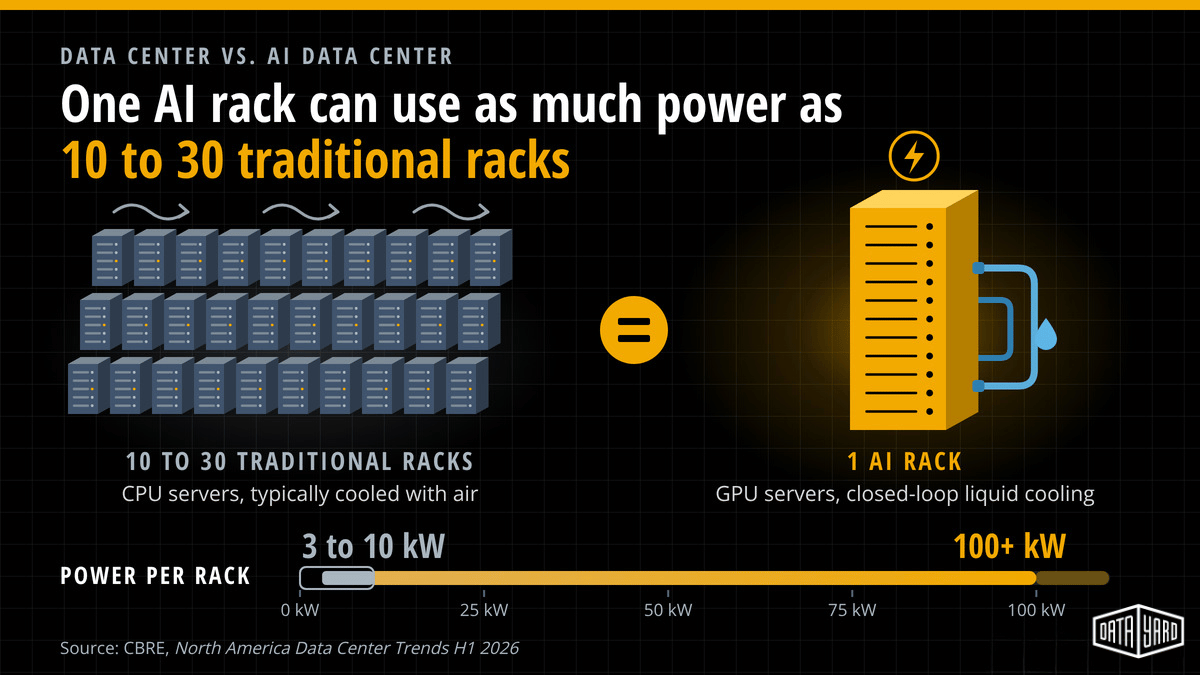
A traditional data center typically runs servers for one company, or a handful of related ones. It's built for everyday workloads like websites, email, databases, and business software, which run on general-purpose central processing unit traditional) servers. Those servers need far less power than AI systems. According to CBRE, traditional servers have historically needed about 3 to 10 kilowatts (kW) of power per rack, which is low enough to cool with air.
So if you've used the internet today, you've used a traditional data center. (Yes, including for reading this blog right now.)
What Is a Colocation Data Center?
A colocation (or "colo") data center works a little differently. Think of this as a "bring-your-own-server" model.
Plenty of businesses own server hardware, but don't want to keep it running in a hot closet or build and maintain an entire data center of their own. Rather than do either of those things, they move their servers into a colocation data center. It's kind of like renting an apartment for your servers: you own everything inside your space, and the building takes care of the rest.
Why do businesses do this? For many, it's more affordable than building and maintaining their own data center, and it's a much better environment for the hardware. Colocation data centers keep servers cool, secure, and connected -- typically with backup power, multiple internet connections, and other redundancies that most offices don't have. Servers that live in a stable environment tend to run more reliably and often last longer than servers sitting in a closet next to the mop bucket, so it makes sense for a business to prioritize where their server hardware lives.
Colocation data centers mostly run the same kinds of everyday workloads as traditional data centers, at similar power levels. Across the industry, the most commonly reported rack density reached 11 kW in 2026, according to Uptime Institute's 2026 Global Data Center Survey. Some colocation data centers support AI hardware, usually in specially upgraded areas with extra power and cooling, but that's not the norm for most colocation facilities.
What That Looks Like at DataYard
DataYard's colocation data center in downtown Dayton, Ohio, is purpose-built to keep business-critical servers running. Here's what's inside:
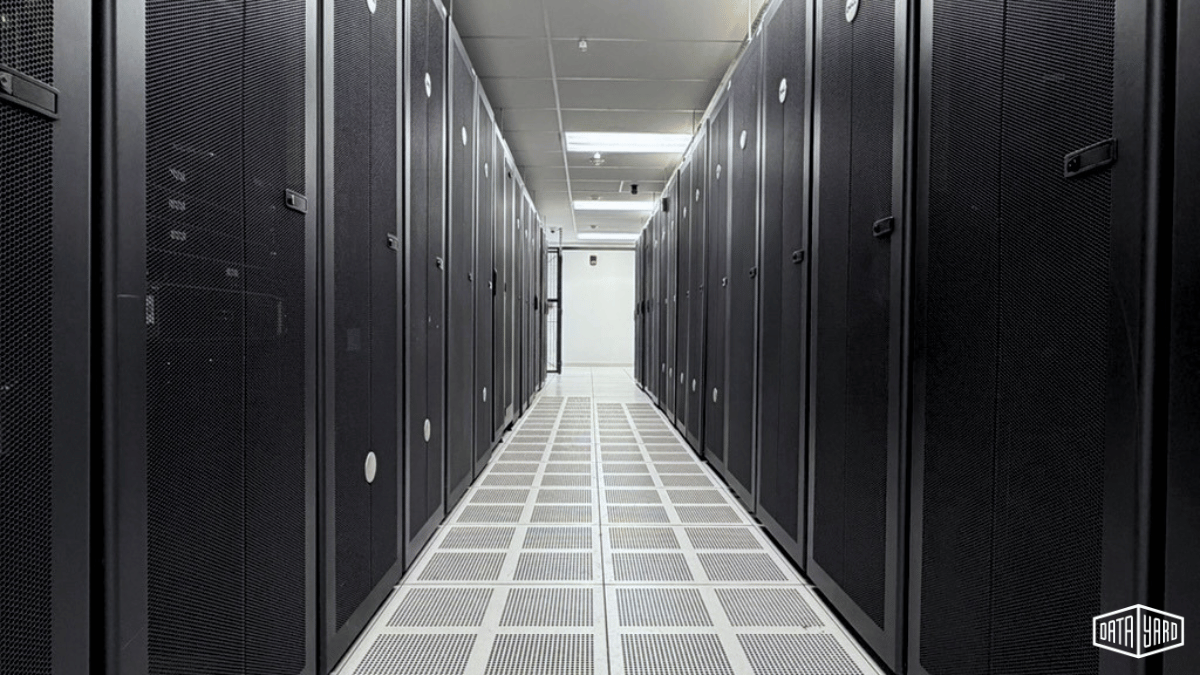
- Redundant power: N+1 uninterruptible power supply (UPS) systems and redundant A&B power feeds, fed by diverse power circuits, with a natural gas generator for extended outages.
- Redundant cooling: N+1 redundancy for all chiller and cooling equipment.
- Multiple high-speed connections: Four diverse fiber circuits, providing 40G+ to the internet.
- Separate mechanical and electrical spaces: UPS and cooling systems sit in a separate gallery outside the data center floor, so their heat, noise, and maintenance stay away from client equipment.
- Multiple layers of physical security: Only authorized personnel get in, with access cards and video surveillance.
- SOC 2 Type 2 Accredited: An independent auditor has reviewed how our security controls actually operate over time, not just on a single day.
- 24/7 personal support: Engineers located right here in Dayton.
DataYard's data center doesn't host many (if any) AI servers. Our data center is built for the more traditional mission-critical systems that businesses rely on every day.
What Is an AI Data Center?
An artificial intelligence (AI) data center is built to do one thing really well: run AI. Instead of everyday, traditional business servers, it's packed with graphics processing units (GPUs), tensor processing units (TPUs), and other AI accelerators that crunch massive amounts of data at the same time.
These facilities handle the heavy lifting behind AI and machine learning (ML): training large models, deep learning, natural language processing (the tech behind chatbots), image recognition, and more. And as AI has taken off, AI data centers have been popping up across the U.S. to keep up with demand.
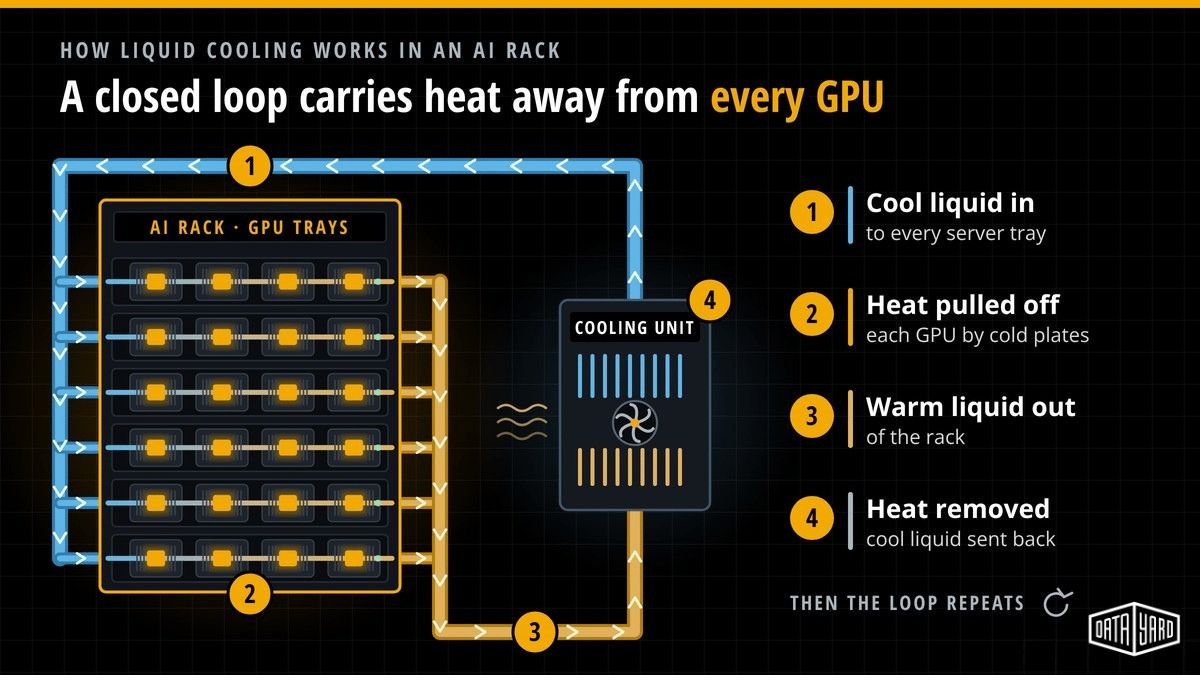
All that horsepower comes with serious power and cooling needs. According to CBRE, today's GPU servers can draw 100 kW per rack and can only be properly cooled with closed-loop liquid cooling. That's a lot of power packed into a very small space.
Here's an easy way to picture it: a traditional data center is a well-run warehouse, and an AI data center is a production line running around the clock. Both are useful in their own way. They're just built for very different jobs.
Data Center vs. AI Data Center: 6 Key Differences
Now for the side-by-side. Here's how the two compare on the things that matter most.
1. Purpose
- Traditional data centers: Everyday business systems like websites, email, enterprise resource planning (ERP) software, databases, and file storage.
- AI data centers: Training and running huge AI models, which most traditional data centers typically aren't designed to handle.
2. Hardware
- Traditional data centers: General-purpose traditional servers, data storage, and networking gear.
- AI data centers: Dense clusters of GPUs and other AI chips built to process huge amounts of data in parallel.
3. Power
- Traditional data centers: Modest power per rack, well within what a typical facility is designed to deliver.
- AI data centers: Much more power in much less space. One AI rack can use as much power as 10 to 30 traditional racks.
4. Cooling
- Traditional data centers: Usually air-cooled, with chillers and air handlers keeping the room at the right temperature.
- AI data centers: Liquid cooling, often piped right to the chips, because air alone typically can't keep up.
5. Size and Scale
- Traditional data centers: Anything from a single room to a large facility, often located close to the businesses it serves.
- AI data centers: Massive campuses that can use hundreds of megawatts (MW) of power. For example, CBRE describes a 430 MW campus being developed in Indiana that's fully leased to a single AI company. AI training data centers typically need at least 200 acres of land (about a third of a square mile), according to JLL's Tom Glover, writing in Intelligent Data Centres. For example, the City of Independence, Missouri, reports that a planned campus from Nebius, an AI cloud infrastructure company, may include up to four buildings totaling about 2.5 million square feet on about 400 acres.
6. Cost
- Traditional data centers: Standard equipment built for steady, predictable workloads.
- AI data centers: Expensive GPUs, specialized cooling, and huge long-term power commitments.
The table below sums up the key differences at a glance.
| Features | Traditional / Colocation | AI Data Center |
|---|---|---|
| Purpose | Everyday business systems | Very large AI models |
| Hardware | Traditional servers | GPU clusters |
| Power per Rack | About 3 to 10 kW | 100 kW or more |
| Cooling | Mostly air | Liquid |
| Size | One room to a large facility | Campuses spanning hundreds of acres |
| Cost | Standard equipment | GPUs, cooling, power commitments |
The short answer is: they solve different problems. An AI data center is defined by how much compute it can pack into a rack. A traditional or colocation data center is defined by how reliably it keeps business-critical systems running.
Why Data Centers Have Been Getting a Lot of Attention Lately
The AI boom has a lot in common with the early days of the internet. Everything is changing fast, and we're all living through it in real time. Data centers are right in the middle of that change, and not everyone is thrilled about it.
What People Outside the Industry Are Seeing
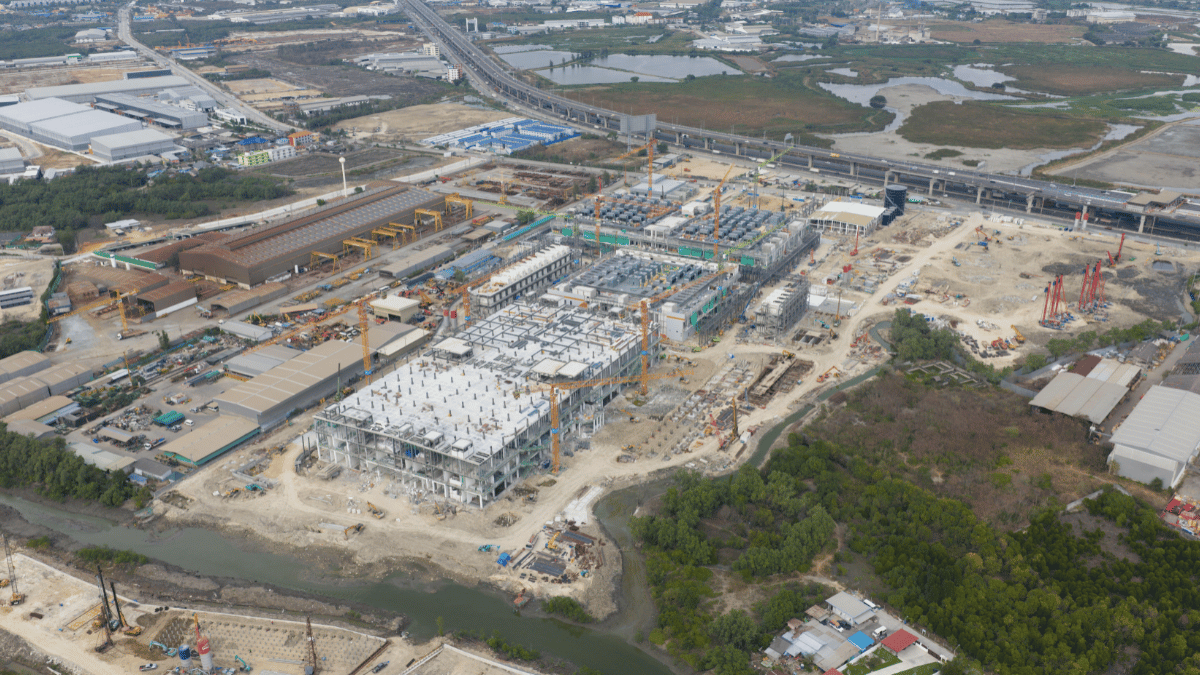
For many communities, the AI build-out is the first time data centers have been impossible to ignore. AI campuses are huge, they go up quickly, and they need enormous amounts of space, power, and, in many cases, water. People reasonably want to know what that means for their electric bills, their water supply, their land, and their neighborhood.
Those concerns are showing up in the polls. In a March 2026 Gallup poll, 71% of Americans said they oppose building an AI data center in their area.
They're showing up in local decisions, too. In September 2025, Google withdrew its proposal for a 468-acre data center campus in Franklin Township, on the southeast side of Indianapolis. The move came after months of pushback from residents, just ahead of a city council vote that was expected to deny it.
What It Looks Like From Inside the Industry
The pressure isn't only coming from the outside. Data center operators are feeling the squeeze, too. Uptime Institute's 2026 Global Data Center Survey, which included more than 800 data center owners and operators, found that:
- 79% say costs are at least somewhat concerning to management.
- Capacity forecasting (76%), supply chain disruptions (72%), and power availability (64%) are close behind.
- 53% are having difficulty finding qualified candidates for open positions.
- 46% of IT workloads now run in third-party facilities, like colocation data centers and the cloud, edging out company-owned sites (44%) for the first time.
Meeting AI infrastructure needs rose up on the list of top concerns for the first time in 2026. According to Uptime, AI's impact ripples through the whole supply chain, pushing colocation rates, equipment costs, power prices, and staffing costs up faster than general inflation, even for operators that don't run AI at all.
Cost is still the number one concern for operators, but it's no longer the only big one. As Uptime's Andy Lawrence explained during a webinar on the findings, reported by Data Center Knowledge, that's not because operators worry less about money:
"It just means the other issues got more serious."
The Part That Gets Lost
Here's what often gets left out of the conversation: the term "data center" now covers both a sprawling AI campus and the downtown facility that might have been quietly hosting your bank's website for 20 years. They're not the same thing, and they don't leave the same footprint. Much of the opposition is aimed at massive AI campuses, not the smaller, local data centers that businesses have relied on for decades.
To be fair, the scrutiny isn't all bad. Ohio is one of several states that have approved new utility rules putting more of the cost of power on the largest data center users, according to CBRE. It's also a good reminder to ask any provider how they operate, how they're powered, and what's actually inside the building.
None of this is about blaming AI data centers. AI is growing faster than a lot of the systems around it can keep up with, from power grids to supply chains to local permitting. The challenge now is finding the right adjustments, and we're hopeful the industry and the communities around it will get there. In the meantime, understanding what each type of data center actually does is a good place to start.
What This Means for Businesses Like Yours
Even if you'll never run an AI model, the AI boom can still reach your business. AI demand is tightening the market for data center space and nudging prices up across the industry. According to CBRE's North America Data Center Trends H1 2026 report, vacancy in North America's primary data center markets hit a record low of 1.4% in the first half of 2026, and rental rates rose for every deployment size it tracks.
That's not a reason to panic. It is a reason to look for predictable pricing, right-sized capacity, and a provider who's upfront about what things actually cost.
Do You Actually Need an AI Data Center?
Honest answer: unless you're a company running its own AI system, probably not. Most of the AI tools businesses use today, like chat assistants, copilots, and AI features built into existing software, run in the provider's own data centers, not yours.
What most organizations actually need is a reliable home for the systems they already run. For example:
- Manufacturers running ERP software, manufacturing execution systems (MES), and file servers typically need reliable power, cooling, and connectivity, plus low latency to the plant floor.
- Web developers and agencies hosting client websites and applications typically need dependable uptime, room to scale for traffic spikes, and support from people who know the environment.
- Businesses that own their hardware typically need secure cabinet space with redundant power, cooling, and internet connections.
Not sure where you land? Start with three questions:
- Are you training or running large AI models on your own hardware?
- How much power do your servers use today?
- Who's going to answer the phone at 2 AM if something goes wrong?
Where DataYard Fits In
DataYard is not an AI data center, and we're not trying to be one. Our downtown Dayton facility is a traditional colocation data center, built for the business-critical systems most organizations run every day.
It's also where we run our own private cloud, hosting websites, applications, and business systems for our clients. So whether you want to bring your own servers or have us host your environment for you, it all lives in the same place, supported by the same Ohio-based team.
We've been running our own data center facilities since 1995. If you're not sure what belongs where, we're always happy to talk it through.
Frequently Asked Questions
What Is the Difference Between a Data Center and an AI Data Center?
A traditional data center runs everyday business systems, like websites, email, business applications, and databases, on general-purpose servers that can typically be cooled with air. An AI data center is built to train and run large AI models, using dense GPU clusters that need far more power and usually require liquid cooling.
Can a Colocation Data Center Host AI Servers?
Sometimes, but it depends on how much power and cooling the facility can deliver to each cabinet. Some colocation data centers have upgraded areas for high-density AI hardware, while others, like DataYard, currently focus on traditional business workloads. If you're planning to run AI servers, ask any provider about per-cabinet power limits before you buy hardware.
Why Do Some People Oppose Data Centers?
Most concerns center on electricity costs, water use, land, and the impact on nearby neighborhoods. Much of that opposition is aimed at massive AI campuses, rather than the smaller, local data centers businesses have relied on for decades.
Is DataYard an AI Data Center?
No, DataYard runs a traditional colocation data center and its own private cloud in Dayton, Ohio, and doesn't currently host a significant number of AI servers.
References
- CBRE. (2026, August 27). North America Data Center Trends H1 2026
- City of Independence, Missouri. (n.d.). Nebius Data Center FAQs
- Data Center Knowledge. (2026, July 31). AI Drives Data Center Uncertainty in Uptime's 2026 Survey
- DatacenterDynamics. (2025, September 23). Google Withdraws Rezoning Proposal for 468-Acre Data Center Project in Franklin Township, Indianapolis
- Gallup. (2026, May 13). Americans Oppose AI Data Centers in Their Area
- Glover, T. (2025). Land and Location: Considerations in an Explosive Data Centre Market. Intelligent Data Centres
- Uptime Institute. (2026, July 29). Uptime Institute Global Data Center Survey 2026