Planning 2027 Infrastructure & Cloud Costs? Free Webinar on October 20

Live Webinar on Zoom

The Road to 2027Hosting Infrastructure and Cloud Cost Planning

Build a more predictable cloud hosting infrastructure budget without sacrificing performance.
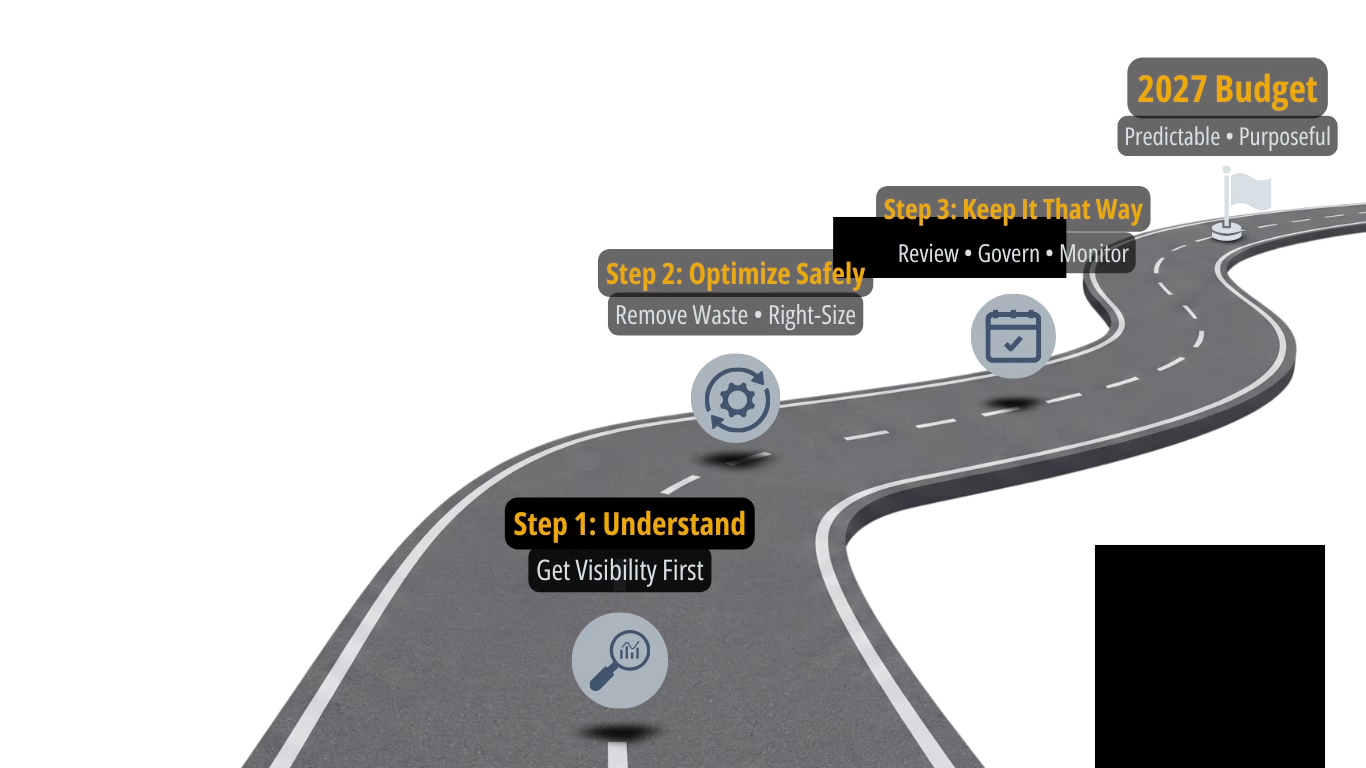
The road to a 2027 budget: step one, understand and get visibility first. Step two, optimize safely by removing waste and right-sizing. Step three, keep it that way through review, governance, and monitoring.

Free Live Webinar

Save Your Seat

  • DateTue, Oct 20, 2026
  • Time2:00 PM ET
  • Length45 min, with Q&A
  • WhereLive on Zoom
Register Now →

Attendees receive the 30-day checklist.

  • FreeNo Cost to Attend
  • 45 MinIncluding Live Q&A
  • Oct 202:00 PM ET
  • ZoomLive Session
  • 3 StepsPractical Framework
  • Since 1995DataYard

The Session

What You'll Learn...

Nobody sets out to overspend on hosting infrastructure. Although possible, costs rarely spike overnight. More often, they grow through new projects, oversized systems, forgotten legacy resources, and changing business needs, and most organizations don't find it until they sit down to build next year's budget.

  • Where costs drift Idle test environments, orphaned storage, and servers sized for a peak that stopped happening years ago.
  • Waste you can cut today The changes that save money without negatively impacting production, and the order to make them in.
  • Right-sizing without breaking things Use real usage data, change one thing at a time, and create a rollback plan before you start.
  • Savings that are not savings Why cuts taken out of backups, monitoring, or security move the cost instead of removing it.
  • What to do with what you recover Edge protection, endpoint detection, firewall modernization: how to decide which gap is worth closing in 2027.
  • Six questions for your budget review A quick checklist to take into your internal budget-planning meeting.

These lessons apply whether your systems run in a private cloud, public cloud, hybrid setup, or your own data center. We won't dive into any platform-specific tools or vendor pricing.

The Framework

The three-phase optimization path An ascending road with three stops: understand your environment, optimize safely, and keep it that way. 1 Understand Get clear visibility first. 2 Optimize safely Cut waste and right-size. 3 Keep it that way Review on a regular cadence.
  1. 1
    Understand Get visibility first
  2. 2
    Optimize safely Cut waste, right-size
  3. 3
    Keep it that way Review on a cadence

Built For

Who Should Attend

  • Manufacturing business owners and operations leaders with small internal IT teams
  • Owners and operations leaders at web development, design, and marketing agencies
  • IT directors and infrastructure managers
  • Finance and operations leaders involved in 2027 technology budgeting

You don't need a dedicated FinOps team to benefit from this session. Whether you manage your own environment or work with an IT partner, you'll leave this session with a clearer view of what next year's infrastructure budget should look like.

Bonus Resource

Every Attendee Gets the 30-Day Checklist

All attendees will receive our downloadable 30-Day Infrastructure and Cloud Cost Optimization Checklist, a step-by-step framework for reviewing your environment after the webinar.

Save My Seat →

Your Presenter

Meet Your Presenter

Natalie Mezera, Director of Client Partnerships at DataYard

Natalie Mezera

Director of Client Partnerships, DataYard

Natalie Mezera leads client partnerships at DataYard, where she has worked with our clients for more than ten years. In that time, she has been part of hundreds of conversations regarding what IT infrastructure a business is running, what it costs, and what nobody has reviewed in years. This session grew out of those conversations.

Trusted by Ohio Businesses Since 1995

DataYard is different. They are true partners who collaborate with us to give us solutions that fit within our needs. So many times I am presented answers well before I think that my vendors understand my challenges.

When we needed to shift our file storage to a cloud-based system, the DataYard team handled every detail. We continue to use their team of experts to help us solve difficult problems.

Sometimes I go to bed forgetting that a major drawing is happening overnight. That is how much trust I have in the cloud solutions DataYard provides for the MegaMillions Lottery.

Before You Register

Questions About the Webinar

This is a live session on reducing unnecessary hosting infrastructure and cloud spend without giving up performance, reliability, or security. Natalie Mezera will walk through a three-phase framework: understand your environment, optimize it safely, and keep it that way.

The goal is not spending less. It is spending with purpose, and knowing next year's number before next year starts. There is a live Q&A at the end.

This session is built for anyone who owns an infrastructure budget heading into 2027. It is most useful for:

  • Manufacturing business owners and operations leaders with small internal IT teams
  • Owners and operations leaders at web development, design, and marketing agencies
  • IT directors and infrastructure managers
  • Finance and operations leaders involved in 2027 technology budgeting

Existing DataYard clients planning next year are welcome as well.

No. The session assumes you do not have a dedicated FinOps practice, a tagging strategy, or a single person who owns cloud cost. That describes most organizations of this size, and the framework is built around it.

You do not need a technical background to follow along, though the material is specific enough to be useful if you have one.

The session stays platform neutral. It focuses on planning strategies rather than any one provider's console, tooling, or rate card, because the same principles apply whether your workloads run in a private cloud, a public cloud, a hybrid environment, or your own data center.

Committed pricing models come up as a concept, but provider-specific comparisons are better handled one-on-one, where we can look at your actual environment.

A computer and an internet connection. The session runs on Zoom, and you will receive a link after registering. No software installation is required.

We will send a reminder the morning of October 20 with your link included.

Yes. We plan to send the recording to registrants within 24 hours, along with the checklist and links from the session. Registering is worth it even if that Tuesday does not work.

That said, the Q&A is where a lot of the value tends to land. It is not scripted, and the answers are specific to what attendees actually ask. If you can join live, we would recommend it.

The 30-Day Infrastructure and Cloud Cost Optimization Checklist is a downloadable worksheet that breaks the framework from the session into four weekly stages, each with its own deliverable.

It maps directly to what Natalie covers, so you can work through your own environment after the webinar rather than starting from a blank page. All attendees receive it.

No. The session is about understanding the infrastructure you already have, not buying more tools. Most of the session covers the framework and the questions to bring into your own budget review.

At the end, Natalie offers a no-cost infrastructure and cloud environment review for anyone who wants help evaluating their current environment or validating their 2027 planning assumptions. Taking it is totally optional, and the ideas from the framework can apply either way.

The information in this session still applies. Visibility, ownership of each line item, right-sizing against real usage, and putting a review on the calendar are budget habits, rather than cloud-specific features.

Placement comes up directly. Optimization is not always about making a workload smaller. Sometimes it is about running it where it makes the most business sense, and on premises can often be that answer.

Reserve Your Seat

Know Next Year's Number Before Next Year Starts

Budget cycles start well before January, and hosting infrastructure decisions have longer lead times than many other budget decisions. Join us to learn practical approaches to reducing unnecessary hosting infrastructure and cloud costs while building a more predictable 2027 infrastructure budget.

Register Now →