What Is a Private Cloud?
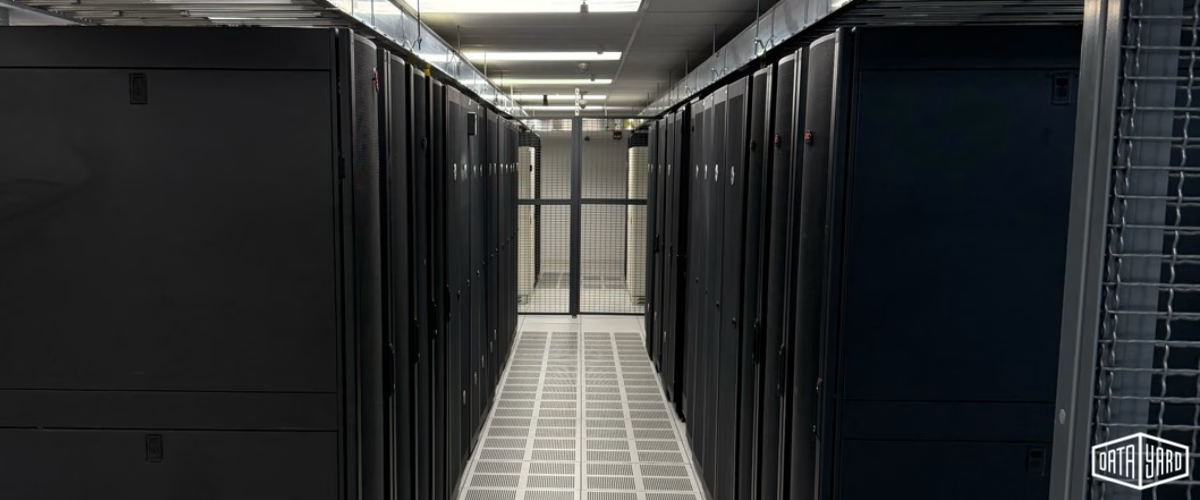
A private cloud is a cloud computing environment controlled and maintained by a single organization. The environment can be hosted on-premises at a business' location, in a data center, or managed by a private cloud provider.
Because the environment is deployed around the business' needs, compute, storage, networking, virtualization, backup, and other infrastructure components can be designed around the organization's requirements.
For small and midsize businesses, a managed private cloud infrastructure can provide dedicated hosting resources without requiring an internal IT team to purchase, maintain, and support every hardware and software component.
What Are the Benefits of Using a Private Cloud?
A private cloud can be particularly useful for organizations with predictable workloads, specialized applications, legacy systems, or infrastructure requirements that benefit from greater control and customization. A private cloud often allows for customization of hardware, software configurations, and cybersecurity protocols.
It can also be useful for businesses that handle sensitive client data and want more direct control over how that data is stored, accessed, and protected, or that need to support data handling requirements specific to their industry. If a business has location-specific requirements from a governing body (i.e. data must be kept in the state they're operating in), a private cloud environment can help check that box.
What Is a Public Cloud?
A public cloud provides computing resources and services through infrastructure operated by a third-party cloud provider.
Platforms such as Amazon Web Services (AWS) and Microsoft Azure allow businesses to provision computing, storage, networking, databases, and other services without purchasing the underlying physical infrastructure.
Resources can often be deployed quickly and scaled extensively as requirements change. Businesses typically pay based on the resources and services they consume.
Public cloud can be a strong fit for cloud-native applications, changing workloads, development environments, and businesses that want access to a broad ecosystem of cloud services.
What Are the Benefits of Using a Public Cloud?
A public cloud environment can be cost-effective since you're not paying for physical hardware, and may have a lower cost than some private cloud options depending on the workload. It is also vastly more scalable, letting you adjust computing power automatically or on-demand as your workload changes. The provider maintains the underlying physical infrastructure, while your organization remains responsible for configuring and managing the portions of the cloud environment that fall under its responsibility.
Private Cloud vs. Public Cloud: What's the Difference?
The primary differences between private and public clouds are in how the underlying infrastructure is allocated and managed, the resources available through the provider, and how the billing model changes.
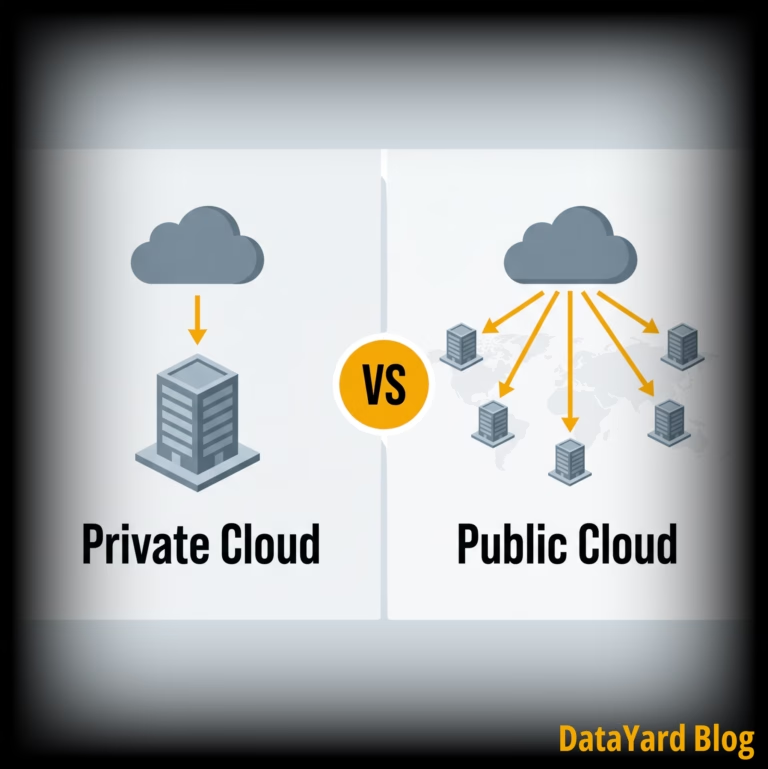
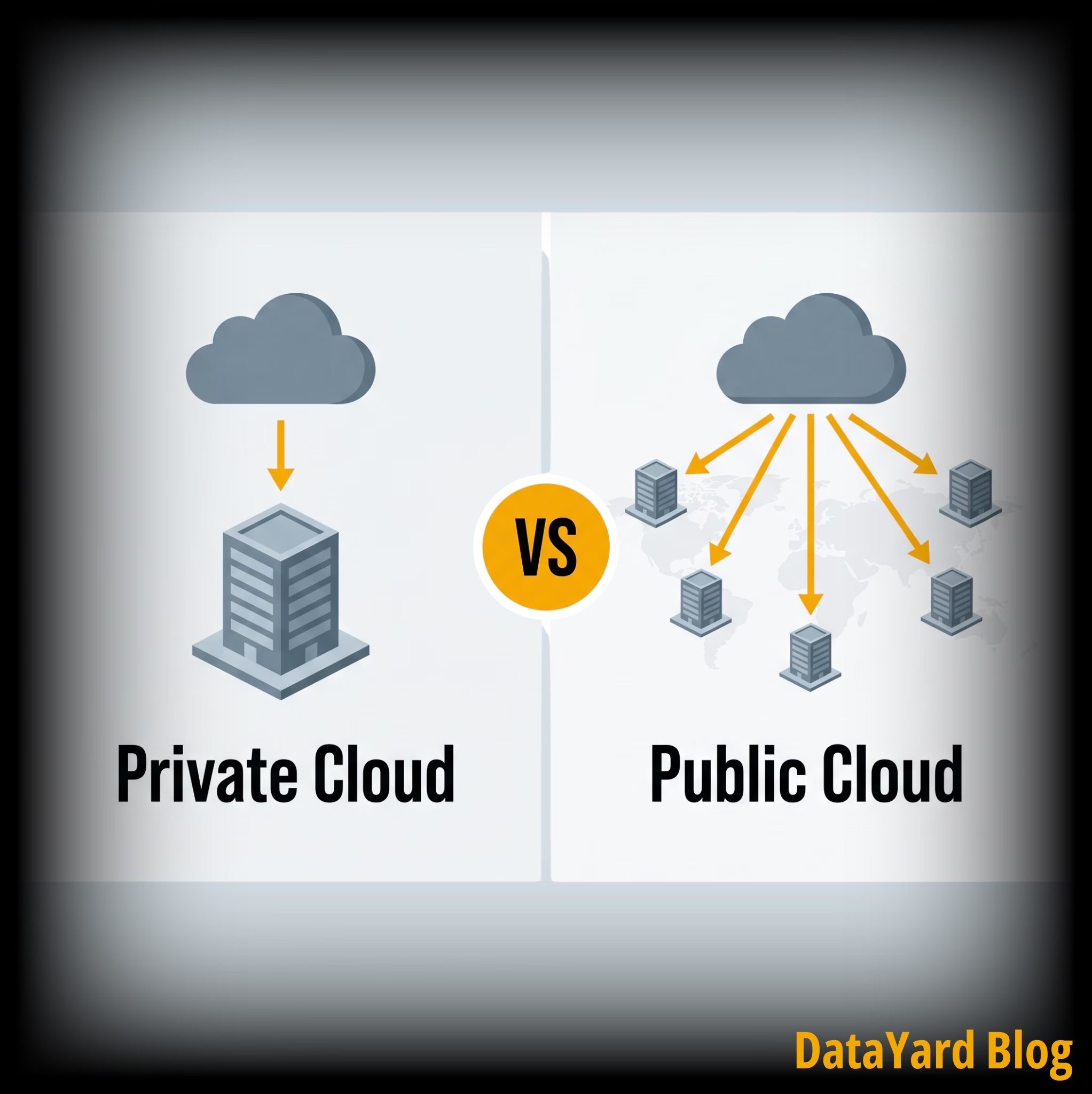
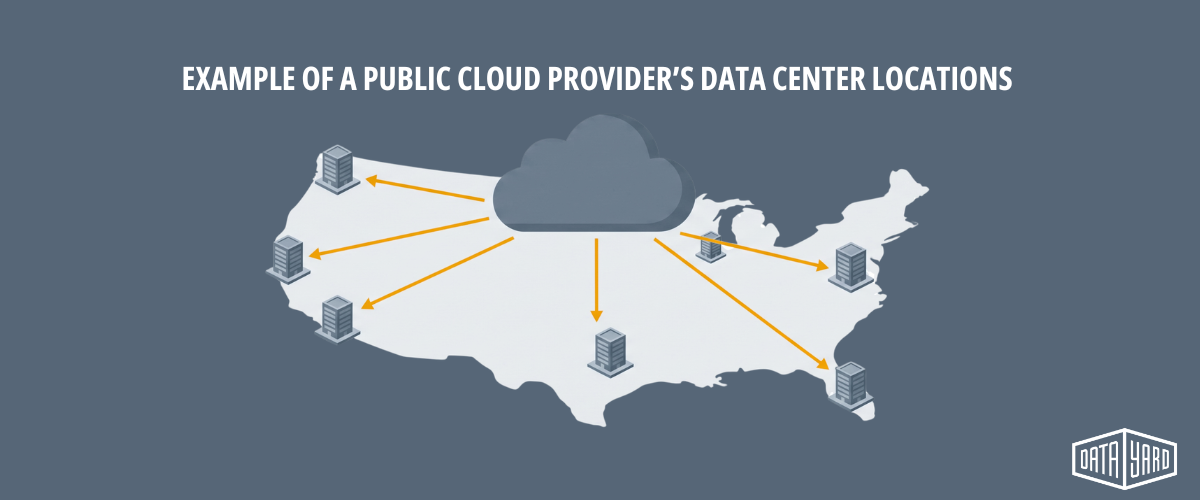
With a public cloud, organizations use services running on a cloud provider's infrastructure, which is typically a large-scale operation with many locations across the country or globe. With a private cloud, the cloud environment tends to have a smaller physical footprint and is controlled and dedicated to a single organization.
For a business evaluating its hosting infrastructure, that difference can affect control, cost, scalability, cybersecurity, performance, and ongoing management.
The table below summarizes some of the key differences between private and public cloud environments.
| Consideration | Private Cloud | Public Cloud |
|---|---|---|
| Infrastructure Footprint | Tends to be smaller-scale, with one or a few physical locations | Spans a much larger physical footprint |
| Customization | Greater control over infrastructure configuration | Broad options within the provider's platform and services |
| Scalability | Capacity can be expanded based on the design of the environment, but can be limited by the resources available | Resources can often be provisioned instantaneously or on demand, with very few limitations |
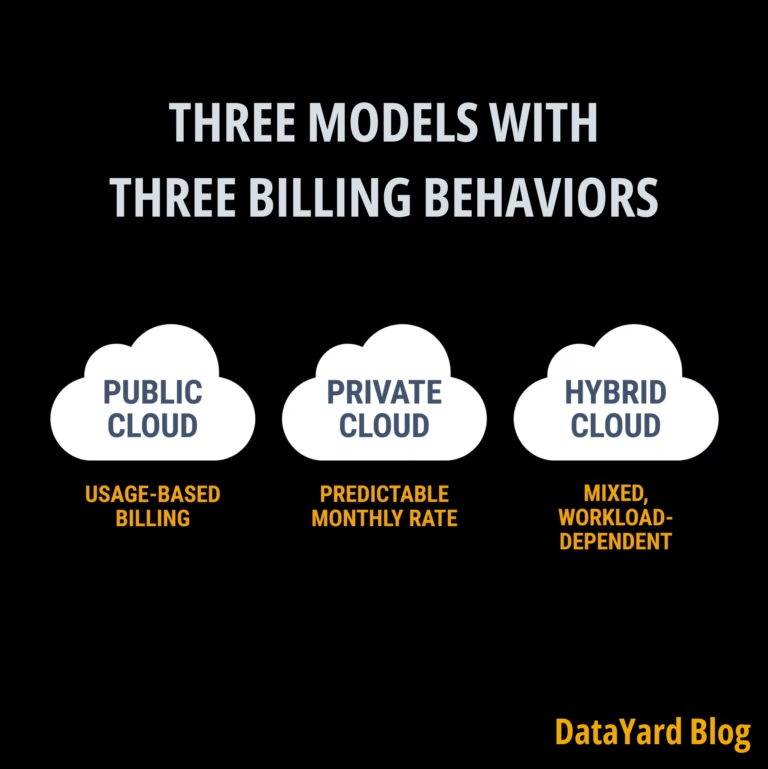
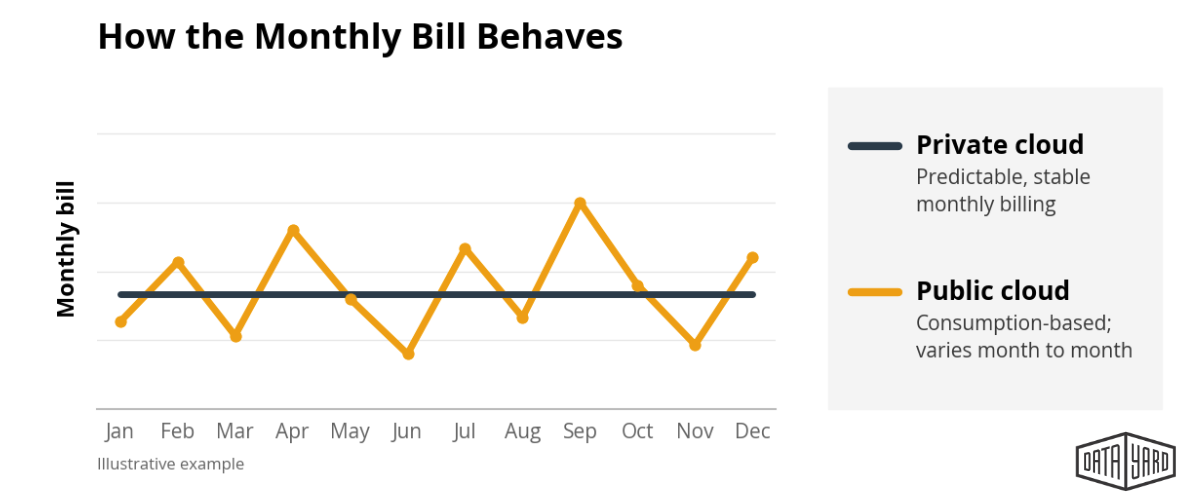
| Pricing | Often based on dedicated resources and management with predictable, stable billing | Commonly consumption-based and can vary month-to-month as usage changes |
| Workloads | Can fit predictable, specialized, or legacy workloads | Can fit variable and cloud-native workloads |
| Cybersecurity | Greater control over the design and configuration of the environment | Extensive cybersecurity capabilities with shared responsibilities |
| Management | Can be managed internally or by a cloud provider | Requires management of the organization's cloud resources and services |
| Support | Depends on the managed service and provider | Varies by platform and support plan |
These are general characteristics rather than hard rules. The right environment depends on the requirements of the applications and workloads being supported.
Private Cloud vs. Public Cloud Cost Comparison
Cost is often one of the first considerations when businesses compare the private cloud vs. public cloud, but the lowest infrastructure price does not necessarily represent the lowest total operating cost.
Public cloud providers commonly use consumption-based pricing. Businesses pay for the resources and services they use, which can be useful when demand varies or infrastructure needs to scale quickly.
However, total public cloud costs can extend beyond compute. Storage, data transfer, backups, cybersecurity tools, monitoring, licensing, support, and other services can all affect the final bill. Additionally, billing for these services is highly variable, and without the proper ceilings in place, costs can add up quickly when unchecked.
Private cloud providers typically use a different cost model because resources are dedicated to the organization. This can make private cloud worth evaluating for stable or predictable workloads where the business has a clearer understanding of its long-term resource requirements.
Rather than comparing the price of an individual virtual machine or server, businesses should consider a broader question:
What will it cost to reliably operate, manage, protect, back up, support, and scale this workload over time?
That provides a more meaningful comparison between cloud environments.
Private Cloud vs. Public Cloud Cybersecurity
Both private and public cloud environments can support strong cybersecurity controls.
Public cloud providers offer extensive cybersecurity capabilities, but customers are in charge of configuring and managing the security on all portions of the environment that fall under their responsibility (i.e. the "Shared Responsibility Model").
The private cloud can provide greater control over how an environment is designed and configured. This can be useful when an organization has specific cybersecurity or data handling requirements, and it also means always knowing where your data lives.
However, choosing a private cloud does not automatically make an environment more secure, just as using a public cloud does not automatically make an environment less secure.
Cybersecurity depends on a number of factors, including (but not limited to): environment architecture, configuration, identity and access controls, monitoring, patching, backups, and ongoing management.
The better question is: whether or not the environment can be designed and managed appropriately for your organization's requirements.
Performance and Application Requirements
One of the most important questions in a cloud decision is often overlooked:
What are you actually trying to run?
A modern, cloud-native application may have been designed specifically to take advantage of public cloud services, automation, and rapid scalability.
An established business application may have very different requirements.
Legacy and specialized applications can have operating system dependencies, licensing restrictions, latency considerations, specialized integrations, or infrastructure requirements that make moving them directly to a public cloud platform much more complicated.
This can be particularly important for manufacturers and other businesses that depend on applications that have been operating reliably for years.
Moving to the cloud does not always require rebuilding those applications.
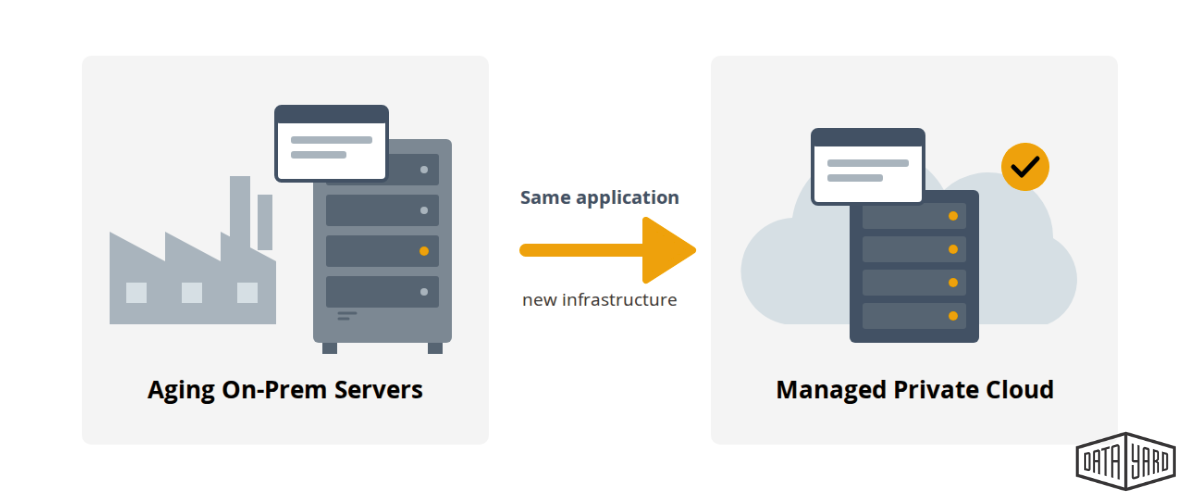
In some situations, moving an existing workload into a managed private cloud can provide a practical path away from aging hardware while limiting unnecessary changes to the application or business' tried and true workflow.
The goal should be to modernize infrastructure in a way that supports the business' success, rather than forcing every application into the same cloud architecture.
Scalability and Capacity Planning
The public cloud is particularly useful when workloads need to scale quickly or demand changes significantly over time.
Additional resources can typically be provisioned without purchasing and installing new physical infrastructure. That can be valuable for applications with unpredictable traffic, temporary projects, development environments, or rapidly growing workloads.
A private cloud can also scale, but capacity planning is typically more deliberate because physical resources are typically limited to some extent.
For businesses with relatively stable and predictable workloads, that approach can work well. Organizations with highly variable workloads may benefit from the elasticity available through public cloud platforms.
Again, the workload should drive the decision.
Cloud Management and Support
Choosing the right infrastructure is only one part of the cloud decision.
Businesses also need to determine who will design, monitor, maintain, troubleshoot, protect, and support the environment.
Public cloud platforms such as AWS and Azure provide powerful tools and services, but organizations still need the expertise and resources to configure and manage their cloud environments.
Cloud management can include:
- Resource configuration
- Monitoring and alerting
- Cybersecurity configuration
- Backup and recovery
- Cost management
- Patching and maintenance
- Performance troubleshooting
- Capacity planning
A managed cloud provider can help take responsibility for many of these operational tasks.
For small and midsize businesses with limited internal IT resources, the management and support model can be just as important as whether the infrastructure is technically private or public.
When Does Private Cloud Make Sense?
Private cloud may be worth considering when your organization has predictable workloads, specialized applications, legacy systems, or infrastructure requirements that benefit from a dedicated environment.
It can also be useful when a business wants greater control over how infrastructure is configured without continuing to purchase and maintain physical servers internally.
Consider a manufacturer running an important business application on aging on-premises hardware. The application may continue to meet the company's operational needs, but the servers supporting it may be approaching the end of their useful life.
Rebuilding that application for a public cloud platform would likely introduce additional cost, complexity, and operational risk.
Moving the workload to a private cloud environment may provide another option. The organization can modernize the underlying infrastructure and architect lower-latency solutions, while reducing the amount of change required at the application level.
For businesses with legacy-heavy environments, that can provide a more manageable path toward cloud adoption.
When Does Public Cloud Make Sense?
The public cloud may be a strong fit when a business needs rapid scalability, wants access to a broad ecosystem of cloud services, or needs to provision resources quickly.
Common use cases can include:
- Cloud-native applications
- Development and testing environments
- Applications with highly variable demand
- Short-term or rapidly changing workloads
- Applications designed around public cloud services
- Workloads that need access to specialized cloud capabilities
AWS and Azure, for example, offer extensive ecosystems spanning compute, storage, databases, networking, analytics, automation, and other capabilities.
For the right workload, those services can provide flexibility that would be difficult or unnecessary to replicate within a private cloud infrastructure.
Do You Have to Choose Between Private and Public Cloud?
Not necessarily.
Some businesses use both private and public cloud resources, often referred to as a hybrid cloud approach.
An organization might run a specialized legacy application in a private cloud while using AWS or Azure for applications designed around public cloud services. Another business might use private cloud infrastructure for predictable workloads while using public cloud resources where greater elasticity is required.
This allows infrastructure decisions to be made based on the needs of individual workloads, rather than forcing every application into the same environment.
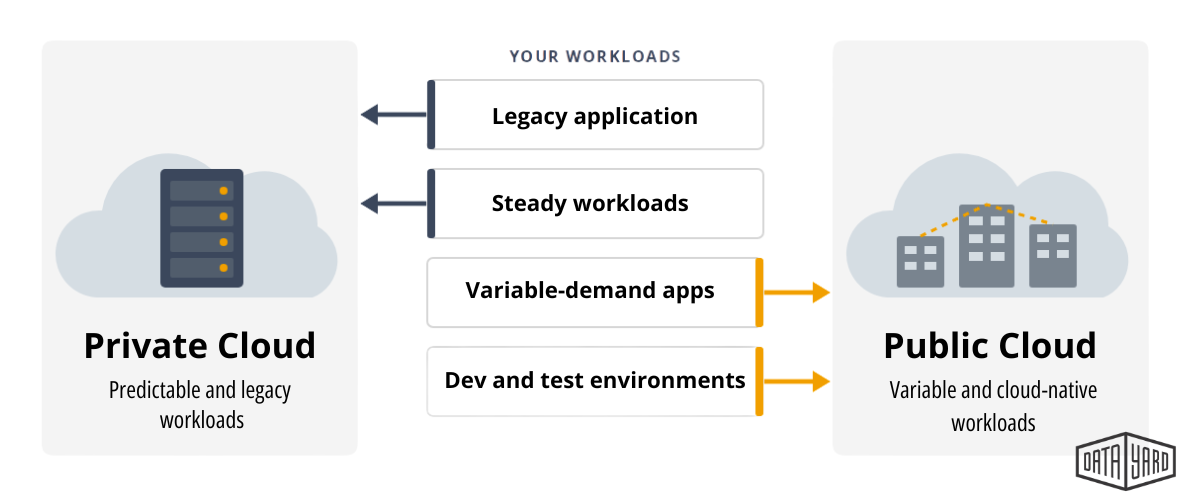
For an established business with a mix of newer and legacy applications, that flexibility can provide a practical path toward modernization.
Questions to Ask Before Choosing Private or Public Cloud
Before selecting a cloud model, start with your business and application requirements rather than choosing a platform first.
Ask:
- What applications and workloads are we moving?
- Are those workloads predictable or highly variable?
- Do any of the applications have specific infrastructure, integration, or licensing requirements?
- What performance and latency requirements do we have?
- How quickly do we need to be able to scale?
- What cybersecurity and compliance requirements apply?
- What backup and disaster recovery capabilities do we need to have in place?
- How much infrastructure management can our internal IT team realistically handle?
- What will the complete environment cost to operate over time?
- Are we trying to replace aging hardware, modernize applications, or both?
- Would different workloads benefit from different cloud environments?
The answers can help determine whether a private cloud, public cloud, or combination of environments is the better fit.
Private Cloud vs. Public Cloud FAQs
Is Private Cloud Better Than Public Cloud?
Neither cloud model is universally better -- rather, both have their advantages. A private cloud can be useful when a business needs predictable billing, greater infrastructure control, or support for specialized workloads. The public cloud can be useful when rapid scalability, consumption-based resources, or access to a large ecosystem of cloud services is important. The better fit depends on the workload and business requirements.
Is Private Cloud More Secure Than Public Cloud?
Private cloud is not automatically more secure than public cloud. Both can support strong cybersecurity controls when properly designed and managed. A private cloud environment can provide greater control over how infrastructure is configured, while public cloud platforms provide extensive cybersecurity capabilities and tools. Architecture, configuration, access management, monitoring, patching, backups, and ongoing management all contribute to the cybersecurity of an environment.
Is Private Cloud More Expensive Than Public Cloud?
It depends on the workload and how costs are measured. The public cloud commonly uses consumption-based pricing, while private cloud costs are often based on the infrastructure deployed and ongoing management. Businesses should evaluate the total cost of operating a workload, including compute, storage, networking, licensing, backups, management, support, and other requirements.
What Is the Difference Between Private, Public, and Hybrid Cloud?
A private cloud provides a smaller-scale cloud environment, typically controlled and managed by one organization. The public cloud provides access to a broader infrastructure and services operated by a third-party provider. Hybrid cloud combines private and public cloud resources so that workloads can run in different environments based on their requirements.
Can a Business Use Private and Public Cloud Together?
Yes. A business may use private cloud for certain applications and public cloud for others. This approach can be useful when an organization has a mix of legacy, specialized, predictable, variable, and cloud-native workloads.
Related pages: Cloud Hosting | Cloud Management | Cybersecurity